
Anúncios
This guide defines “fishing in windy conditions” as adapting presentation, location, and safety so you can keep catching fish when forecasts are blustery.
Wind often concentrates bait and raises oxygen, which can trigger steady action. Many anglers once avoided rough days and missed the best bites, while moderate breeze frequently beat calm water for consistent results (Beyond Braid, 2025).
Expect harder casts and trickier boat control, but also predictable feeding lanes where fish stack and feed harder. This article will first explain why the bite changes, then help you judge whether a day is fishable, and finally cover spots, positioning, casting, and tackle adjustments.
By the end, you will know how to pick protected water, keep line control, and choose lures and rigs that track in chop. Also note: there are wind levels where safety and judgment mean staying ashore.
These practical tips apply to both boat and bank anglers across inshore waters, lakes, and reservoirs. Adopt a wind-day mindset: be flexible, make small compromises, and use the breeze to your advantage.
Anúncios
Why Wind Changes the Bite: What’s Happening Under the Surface
A steady breeze reshuffles the top layer of water, creating feeding corridors where prey and predators concentrate.
Wind-driven buffet lines
Surface flow corrals plankton and micro-life. Baitfish track that food, and predators stack tight along the line. This creates clear zones you can target from shore or boat.
Wave action and oxygen
Chop stirs the column and raises dissolved oxygen. Higher oxygen often means more aggressive action and longer chase windows for active fish.
Anúncios
Turbidity, vibration, and lure choice
When clarity drops, fish rely less on sight and more on vibration and silhouette. Choose lures with strong profiles and sound when water goes murky or light is low.
Wind source, pressure, and surface cues
Watch the weather system that makes the winds. Steady pre-frontal breeze often boosts feeding; erratic storm gusts can shut fish down.
Read the surface: windward points, shorelines, and structure lines often show bait flicker and surface disturbance that masks your approach.
Wind Speed and Decision-Making: When to Fish and When to Stay Home
Before you leave the ramp, match forecasted wind numbers to your planned route and backup options.
Light wind: practical range
5–10 mph gives easy boat control and accurate casts. Small ripples hide your approach and keep pressure low on wary fish.
Moderate “sweet spot”
10–16 mph often outperforms calm days. That chop pushes bait, raises activity, and still allows safe spot control for most anglers.
Strong thresholds and tough runs
16–25 mph becomes expert territory. Expect whitecaps, heavy spray, and constant drift. For inshore fishing, 15–20 knots+ often makes open-water runs punishing.
Danger zone: when to stay home
Winds above 25 mph are commonly dangerous and usually not worth the trip. Heed small craft advisories, rapidly shifting gusts, or any scenario where you cannot reach the launch quickly.
- Check sustained vs gusts and direction for your planned time on the water.
- Plan shorter, protected trips on higher-wind days rather than canceling automatically.
- When safety thresholds or advisories appear, stay ashore.
| Wind Category | mph Range | Practical Advice |
|---|---|---|
| Light | 5–10 mph | Good for accuracy, easy control, low spook factor |
| Moderate | 10–16 mph | Sweet spot: bait pushed, reliable bites, manageable |
| Strong | 16–25 mph | Expert-only; fishable in lee or canals, avoid open bays |
| Dangerous | 25+ mph | Commonly cancel trip; small craft advisory territory |
Fishing in Windy Conditions: Find Protected Water and High-Percentage Spots
Find calm water by thinking like the fish: where does the wind leave room to feed?
Think in lee water. Instead of asking where you usually cast, ask where you can control a cast and keep a lure in the strike zone. Pick the protected side of islands, points, or shorelines based on wind direction.
Use spoil banks and canals to create calm casting lanes. Position so the wind does not blow straight down the channel. Work the sheltered edge where current seams meet structure.
Man-made features are dual-purpose: docks, flood walls, levees, and platforms block waves and form ambush lines. Rock jetties and points break light and stack bait, creating tight, predictable pockets.
Natural wind breaks like roseau cane and tall shoreline vegetation also cut waves and provide cover for bait and predators. Target edges where wind-driven flow hits structure — those are true high-percentage spots.
| Spot Type | Why It Works | How to Fish It |
|---|---|---|
| Lee of land | Reduces surface chop; keeps lure in zone | Cast parallel to shore, work edges |
| Spoil banks / canals | Creates calm lanes and current seams | Position on protected edge; retrieve along seam |
| Docks / levees | Blocks wind and provides ambush shade | Pitch or slow-roll lures near pilings |
| Rock jetties & points | Stacks bait and interrupts flow | Work breaks and transition zones |
Boat Positioning and Shore Strategy in Wind
Smart boat placement turns an awkward day into steady casts and more time with a line in the water. Set the craft so the breeze helps you hold an angle rather than pushing you onto hazards.
Keep a safety buffer and control the angle
Rule: don’t let the wind shove you toward rocks, pilings, or shallow flats. Maintain an exit lane and a clear buffer to react to gusts.
Use boat positioning as your primary control lever. Aim to sit at an angle that keeps the line tight and reduces belly so bites register better.
Plan routes and shorten open crossings
Choose protected runs through bayous, canals, or the lee of islands. Island hopping shortens rough crossings and lowers time spent fighting the elements.
Avoid long open-water legs that can push you into hazards or create extra knots and tangles.
Bank-angler placement and rod notes
Shore anglers should pick windblown coves, points, and shallow zones where food concentrates. Stand where you can cast safely and limit snags.
- Rod and line management: keep the rod tip aligned with the drift to cut slack and improve hooksets.
- Time saver: fewer wind knots means more casts and better odds at a bite.
Casting Adjustments That Beat the Breeze (and Cut Down Wind Knots)
When the breeze picks up, your casting angle becomes the most powerful tool for staying effective. Choose control over distance and adjust technique to prevent wind knots and backlashes.
With, across, or into the wind — which to pick
With the wind gives max distance but risks slack. Across balances control and reach. Into improves contact but needs heavier baits and tighter technique.
Keep the lure low with roll casts
The roll cast keeps the lure under gusts. Think sidearm or a short “golf swing” that travels low and tight to the water. This reduces ballooning and wind knots for most setups.
Spinning vs baitcasting tweaks
For spinning reels, remove line twist, close the bail by hand, and avoid ultra-light lures that helicopter. For baitcasters, tighten spool tension and braking. Smooth, shorter strokes beat long power casts when gusts blow.
- Control-first approach: aim for accurate casts and steady line control over distance.
- Line watching: in chop, watch the line visually for subtle bites and slack before relying on feel.
Practical drill: spend 10 minutes practicing casts with each angle to learn what your gear can handle before moving into tight structure.
Tackle and Rig Choices That Hold Up in Chop
Choose tackle that keeps line tight and presentations clean when chop shortens strike windows.
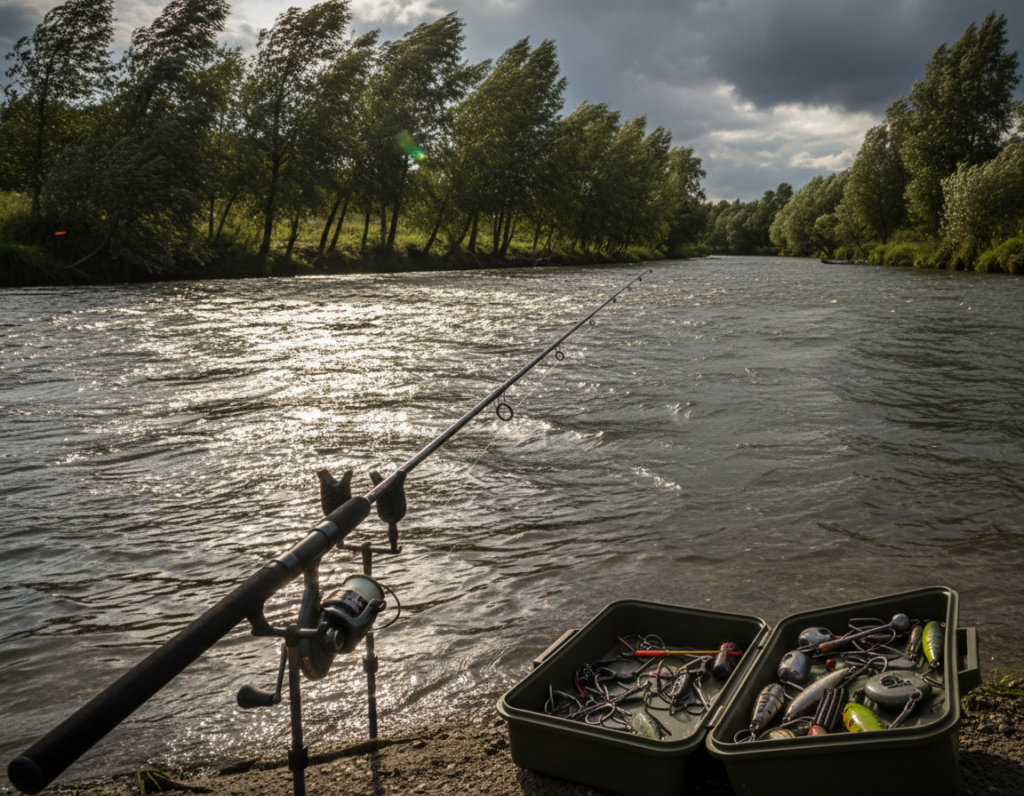
Line selection matters. Braid’s thin diameter cuts wind drag and boosts sensitivity, so it helps you feel subtle hits through chop. Use a short fluorocarbon leader for abrasion resistance and low visibility near structure.
Monofilament still has value. Its stretch absorbs shock from waves and sudden runs. That can save a hookset on a shaken-up retrieve.
Rod and reel setup. Pick a rod with a little extra power to drive hooks through slack. A medium-heavy blank of moderate length balances control and casting. Use a faster retrieve to pick up slack and keep lure action consistent.
Choose heavier, streamlined lures that cut wind and flash. Reaction-style baits with strong vibration help trout and redfish find your offering when water is stirred.
- Pair braid main with a fluorocarbon leader for most inshore fishing scenarios.
- Swap a weighted cork rig that tangles for a drop shot where the sinker leads and wraps drop dramatically.
- When artificials fail, simple natural bait like a nightcrawler can trigger bites in shallow, protected flats.
| Item | Benefit | When to Use |
|---|---|---|
| Braid + Fluorocarbon leader | Low drag, high sensitivity, abrasion resistance | Structure edges, windy bays |
| Monofilament | Stretch to absorb shock | Shallow flats with sudden waves |
| Streamlined reaction lures | Cast cleanly, vibrate in dirty water | Stirred or murky areas for trout & redfish |
| Drop shot | Fewer flight wraps, cleaner presentation | When weighted cork rigs tangle |
Conclusion
A blustery day often rewrites the map of productive water, rewarding anglers who adjust location and gear.
Core takeaway: moderate breeze can concentrate bait and boost oxygen, so adapt your presentation, pick lee spots, and use heavier, streamlined lures to keep contact and catch fish.
Follow a simple rule: moderate mph ranges often create steady action; strong gusts need protected routes and experienced crew; sustained 25+ mph usually ends the trip early for safety.
Next steps: check gusts, pick lee shorelines or spoil banks, choose reaction baits, tweak casting style, and call it when conditions exceed your comfort zone. For more windy-day tips, read the linked guide.


 English
  Spanish