
Anuncios
Trolling means pulling lures or bait behind a moving boat to search larger areas than a bank or anchored approach. This simple idea creates a bigger search footprint across water and raises your odds of finding fish quickly.
With multiple lines run at varied distances and depths, anglers keep presentations moving through travel lanes and feeding corridors. That controlled spread cuts wasted passes and increases contact with fish.
This article shows how to plan, rig, and execute a repeatable method that is more than just driving around. Pattern discipline and route planning turn random effort into consistent results.
What you will learn: where this approach shines in U.S. waters, essential gear, route and spread planning, speed and depth control, and how to use electronics to find productive water.
Follow a clear process that blends planning, depth control, and spread management so you systematically put more presentations in front of fish.
Anuncios
Why trolling covers more water and finds fish faster
A moving boat turns each pass into a rolling test of depth, lure type, and speed. That constant motion keeps bait and lures in the strike zone far longer than a single cast and retrieve. A steady pull keeps action consistent and reduces the chance of spooking wary fish by running offerings well behind the hull.
Dragging bait and keeping action consistent
Dragged baits hold a steady action over longer distances, so they read as natural to predators. That steady pull also helps set the hook while the boat moves, increasing hookup consistency on aggressive strikes.
Running multiple lines to build a search grid
Using several lines at varied distances and depths creates a fast, methodical search. Different lures, depths, and line lengths let you probe the same stretch of water without constant repositioning.
Anuncios
Why this can beat casting for open water coverage
When fish are scattered across flats, basins, or long beaches, sampling more water per hour matters. Casting wins when you already know the spot; methodical trolling is the best way to find that spot in the first place.
| Spread Option | Primary Goal | Mejor uso | Expected Result |
|---|---|---|---|
| Wide, shallow plugs | Cover surface and near-surface | Long flats and wind-driven bait schools | Quick ID of active topwater fish |
| Mixed depths with divers | Probe multiple horizons | Drop-offs, ledges, and basins | Faster depth pinpointing when fish roam |
| Planer boards + backing baits | Max lateral spread | Clear water or pressured spots | More presentations, reduced spooking |
Once one line connects, use that feedback to move other lines toward the effective depth or bait profile. This decision-making loop raises your odds to catch fish without losing search momentum. For step-by-step comparisons of when to troll versus cast, see trolling and casting tips.
Where trolling works best in U.S. waters
Choose places that let you run steady, repeatable passes. Long, open contours and consistent structure make the approach efficient. In those spots the boat spends more time presenting baits and less time resetting gear.
Great Lakes and large reservoirs
Best for freshwater species such as walleye, lake trout, bass, pike, and muskellunge.
These areas have long breaklines and basins where bait gathers. Covering those contours quickly helps locate roaming fish.
Inshore reefs and wrecks
Near-reef structure, rips, and wreck edges attract striped bass and mackerel. Moving presentations along current lanes triggers strikes from ambush predators.
Open-water big game
Offshore, this approach suits tuna, marlin, mahi-mahi, and wahoo. When you need to present large offerings at speed, a boat-based spread works best.
When not to force it
Skip this method in tight rivers, small lakes, winding shorelines, or places with rapidly changing depth. In those areas your spread will snag or fall out of the strike zone.
| Area Type | Typical Species | Why it Works |
|---|---|---|
| Great Lakes / Big reservoirs | Walleye, lake trout, bass, pike | Long contours, predictable bait, repeatable passes |
| Inshore reefs & wrecks | Striped bass, mackerel, coastal predators | Current lanes and structure concentrate prey |
| Offshore open water | Tuna, marlin, mahi-mahi, wahoo | Need for speed and spread over distance |
Boat, rods, reels, and tackle essentials for efficient trolling
A clean boat layout and the right gear make every pass more productive and safer. Keep cockpit space clear, place stable rod holders along the rails, and map rod placement to reduce tangles when you turn.
Boat setup basics
Stable holders and a logical deck plan cut chaos during hookups. Leave room to move, secure loose tackle, and position rods so reels are easy to reach.
A trolling motor is a major upgrade for freshwater work. It gives quiet, low-speed control and steady speed changes so your baits hold depth in feet without guesswork.
Trolling rods and reels
Use longer rods—commonly 7.5–9 feet—with forgiving actions to absorb surges and reduce pulled hooks. Pair them with baitcasting reels that have line counters to repeat line-out and hit consistent depths.
Lines, leaders, and depth-control tools
Choose abrasion-resistant line, quality swivels, and strong terminal knots. Steady pull exposes weak connections fast.
- Sinkers — simple drop to reach deeper zones.
- Diving plugs — set dive curves at speed.
- Planer boards — push lines to each side for wider coverage.
- Downriggers — hold bait at precise depth in feet.
“Combine the right tackle, a steady boat speed, and repeatable line-out to make depth a measured result, not a guess.”
| Artículo | Objetivo | Typical Specs |
|---|---|---|
| Rod | Absorb strikes and leaks | 7.5–9 feet, forgiving action |
| Reel | Repeatable depth control | Baitcasting with line counter |
| Planer board | Spread lines to each side | Wider lateral coverage, reduces spooking |
| Downrigger | Precise deep control | Set depth in feet, exact placement |
How to plan a trolling route before lines hit the water
Plotting a clear route before you leave the ramp saves time and makes each pass count. Use charts and aerials to mark structural edges—breaklines, channel swings, points, flats, reefs, and wrecks that concentrate bait.
Pre-plotting a course on maps and aerials
Walk a map slowly and mark the most likely travel lanes and depth transitions. Those features are where bait and predators meet.
Identify multiple lines of attack:
- Breaklines and drop-offs that hold fish near specific depths.
- Points and channel edges that funnel bait into a narrow area.
- Flats and reefs that act as ambush spots in open waters.
Build a repeatable pass for real conditions
Design your first pass to match the depth band you intend to fish so your spread stays steady in the strike zone. Choose an angle that accounts for wind, waves, and current so lure action and line tracking stay consistent.
Plan turns and lanes to avoid congestion and keep other anglers safe. A simple rule: if a pass produces bites, run the same course and depths before you change tackle or way of approach.
Having a plan prevents wandering. Random circles burn fuel and shrink the time your gear spends in productive water.
Electronics will refine this charted course—your map route is the starting hypothesis; sonar confirms the best depths and the exact spot to repeat.
Using electronics to cover more water with fewer wasted passes
Put your sonar and chartplotter to work before you set lines. A short scan run on plane reveals baitfish and fish marks and shows the depths where they stack. That quick check helps you choose a depth band to target and limits empty passes.
Scan on plane to find productive depth fast
Run at planing speed and watch for schools, arches, or stacked targets. When you spot baitfish, note the depths and mark a waypoint. That gives you a repeatable spot to cross with your spread.
Follow walls and sudden depth changes
Use sonar and charts to trace channel edges, drop-offs, and ledges. Predators travel these lines. Monitor bottom composition and temperature to avoid water that looks good on paper but lacks life.
Turn marks into a plan
- Mark exact waypoints where fish or bait stack.
- Route passes to intersect those points at the recorded depths.
- Scan, set lines, run the pass, then refine waypoints when you get bites.
“Electronics reduce guesswork—fewer wasted passes mean more time with baits in the right zone.”
Trolling fishing technique fundamentals: speed, depth, and line length
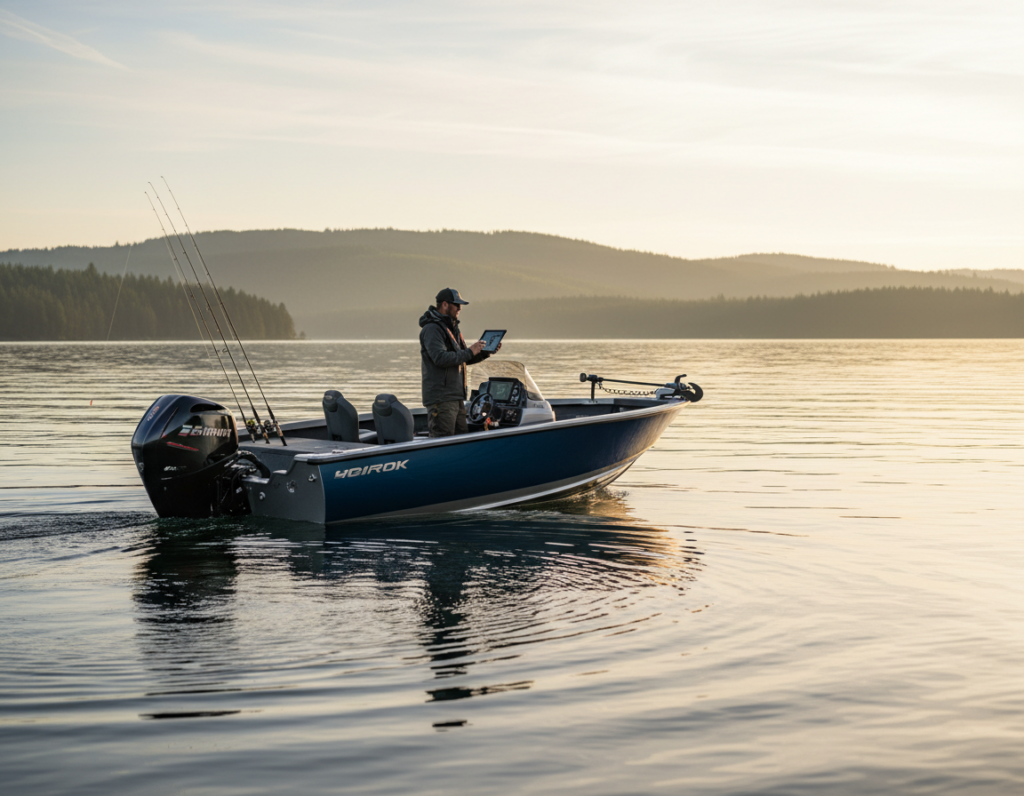
Mastering how fast you run and how much line you let out transforms a pass from guessing into targeting. Control of speed is the master dial: it alters lure action, changes running depth, and shifts how species respond in different conditions.
Dialing in speed by species and lure action
Start with species-based speeds and refine from there. Freshwater often sits around 1–3 knots; inshore up to 5 knots; offshore higher.
Example: walleye crankbaits often fish best near 1.8–2.0 mph, while harnesses run slower, around 1.0 mph. Adjust until bites follow.
Controlling depth with gear and speed
Depth is a system: diving lips, added weight, and line-out work together. A small speed change can move a lure several feet.
More line out usually equals more running depth in feet. Use downriggers or weights when precise feet control matters.
Line length, turns, and avoiding hazards
More line gives stealth and depth but raises turn risk. Long spreads can cut corners and run into shallow reef or structure.
Turning protocol: make slow, wide turns; watch which side of the spread climbs; shorten line on winding contours.
Quick depth checks before you send it back
Run a spare lure close to the boat and watch action. This sanity check answers the question: does this look like natural prey at this speed?
“Control speed, depth, and line length on purpose and you spend more time in the strike window.”
Patterns that put baits in front of more fish in less time
Patterns matter more than power. Read how fish group on sonar and adjust your spread to fit the behavior you see. That choice saves time and keeps more baits in the strike zone.
Identifying behavior: schooling vs. shoaling
Shoaling shows as loose, spread-out marks. Keep trolling steady and use the 15-minute rule to test a stretch.
Schooling appears as tight piles. When you see that, stop long trolling runs and switch to casting or live bait for fast results.
The 15-minute rule and motor-and-reset
Once you mark a fish, run a planned pass parallel to the contour and give it 15 minutes. Reset the timer with any bite, hit, or new mark.
This protects your day by sampling a productive mile without over-committing to dead water.
When the bite dies and sonar clears, reel up, put the boat on plane, and run back while watching electronics. Decide quickly if fish moved shallower, deeper, or down the beach.
Working structure, run-and-gun, and spread scaling
Mark waypoints on ledges, rips, and drop-offs and pick a repeatable angle of attack that factors wind, waves, and current. That makes each pass consistent and easier to repeat.
When schools are tight and moving, go run-and-gun: cover ground fast, stop on a mark, then cast or offer live bait. This often beats long passes.
Start with fewer rods and one or two boards. Add lines and boards as you master turns and netting. Keep the boat moving on hookups to avoid snags and keep other lines fishing.
“Rotate a variety of baits and colors on a steady cadence — try changes every 15 minutes when you aren’t getting bit.”
Conclusión
Cover more water by planning a simple, repeatable run: mark depths, set a small spread, and run that course with intent.
Think of this as a system: use electronics to confirm bait and depth, control speed and line-out, and let bites tell you when to shift. Gear and tackle—rod, reel, boards, and depth tools—make presentation repeatable in feet and consistent across conditions.
Start with a manageable spread, test lures and bait methodically, then add lines as boat control improves. Apply the 15-minute rule when fish are spread, use run-and-gun on tight schools, and keep the boat moving during hookups.
Lista de verificación rápida: confirm speed, confirm lure action, confirm depth, confirm line-out, then repeat the productive course until the area stops producing. To refine patterns, see a guide on how to develop a successful pattern. Troll with purpose, track variables, and you will catch fish more often.


 Spanish
  English