
Anuncios
Efficiency on the water means fewer wasted minutes, fewer lost fish, and steadier presentations during a session. Good hand gear speeds rigging, fixes snags faster, and keeps you fishing when conditions change.
This article acts as a buyer’s guide for U.S. anglers who want gear that reduces re-rigging and speeds problem solving. We’ll show how pliers fit into a system with rods, reels, and fishing line so each piece works together instead of creating friction.
For beginners and returning anglers: you don’t need every gadget. Pick a few reliable items that cover common scenarios, help with hook removal, and protect both you and small fish.
We focus on present-day freshwater and mixed-waters use across the United States, from bank casts to boat trips. Start with why simple items matter, then learn about pliers and hand pieces, rod/reel basics, terminal tackle, lures and organization, and finish with a quick checklist and selection tips.
For a starter list that mirrors state recommendations—rod/reel, line, hooks, bobbers, net, pliers and ruler—see a short primer starter gear list.
Anuncios
Why the Right Fishing Tools and Gear Make You Faster, Safer, and More Effective
Making smart kit choices turns slow, stressed moments on the water into steady, productive time with your line.
Efficiency means more casts and more chances at a catch. When you avoid digging through a bag or re-tying knots, your line stays in the water.
Efficiency and time on the water
Keep a small, repeatable setup so routines become automatic. Familiarity speeds every step from opening the bail to checking drag on the reel.
Anuncios
Safe fish handling and quick hook removal
Pliers let anglers remove hooks fast and cut risks to fingers and fish. Shorter air time improves release outcomes and reduces injury.
Cutting downtime from common snags
Wind knots, tag ends, bent hooks, and stuck split rings cost minutes. A focused kit shortens each delay and keeps you fishing.
Line care matters: control twists, trim tag ends, and match line test to target species. That reduces break-offs and wasted casts.
Next: pliers are the single most-used hand tool for hook removal, hardware tweaks, and quick fixes that keep you on the water.
Fishing Pliers and Must-Have Hand Tools for Better Hook, Line, and Lure Control
Well-chosen pliers and a few hand pieces turn small problems into quick fixes on the water.
Needle-nose for deep hook removal
Needle-nose pliers have narrow jaws that reach deep into mouths and around treble points on spoons and blade baits. They make removing treble hooks from a thrashing fish faster and safer for both angler and fish.
Clean line cuts and fast knot work
A reliable cutter gives clean line ends. Clean cuts cut knot failures and speed re-tying. Short tag ends also stop weeds and ice from catching on guides.
Split-ring and hardware control
Choose pliers that open split rings and bend small hardware. Swapping snaps, changing hooks, or tuning a lure’s eye is quicker than using fingernails.
Real on-water scenarios
- Unhooking a fish that is still thrashing.
- Removing a treble snag from a net or jacket.
- Bending a slightly opened hook back into shape to keep a catch.
Buying criteria for U.S. freshwater and mixed waters
Look for corrosion resistance, comfortable wet grips, spring action, a solid cutter, and a sheath or lanyard. Pick a mid-size pair for most jobs and carry a small backup cutter onshore.
fishing tools guide to Getting Your Rod, Reel, and Line Working as a System
A well-tuned rod, reel, and line act as a single unit. When each part matches the others, casts go farther, hooksets land more fish, and fewer missed opportunities occur.
System basics: rod power and action, reel type, and fishing line choice must suit your target species and skill level. Mismatches cause backlashes, poor distance, and lost fish.
Choosing the right rod and reel combo for your skill level
For kids and true beginners, a spin casting combo keeps setup simple and frustration low. Most new adult anglers do best with a spinning rod and reel; it casts farther and forgives errors.
Advanced anglers who need pinpoint accuracy near cover move to baitcasting combos once technique improves.
Spin casting vs spinning vs bait casting setups
Spinning: versatile and easy. Spinning casts well with light lures.
Baitcasting: higher accuracy and power for heavy lures, but demands practice to avoid tangles.
fishing line basics and drag fundamentals
Monofilament is the friendliest for knot tying and handling. Fluorocarbon offers different performance for visibility and sensitivity.
Use 6–12 lb pound-test for many freshwater species as a practical starting range.
Drag tip: set drag so the fish can pull line under steady pressure. That prevents break-offs and saves time re-tying after a snap.
| Skill Level | Recommended Combo | Starter Line |
|---|---|---|
| Beginner / Kids | Spin casting combo, 5–7 ft | Monofilament, 6–8 lb |
| New adult anglers | Spinning rod & reel, 6–7.5 ft | Monofilament, 8–12 lb |
| Advanced | Baitcasting combo, 6.5–7.5 ft | Fluorocarbon leader over braid or mono, 10–20 lb |
Practical buy tip: start with a fiberglass combo for durability and value, then upgrade to graphite for sensitivity once your style is clear.
Clean line cuts and quick re-ties from hand gear only pay off when the rod, reel, and line are properly matched. Set the system right and you spend less time fixing equipment and more time casting.
Hooks, Terminal Tackle, and Rigging Tools That Speed Up Setup Changes
A compact set of hooks and terminal pieces keeps rig changes quick and predictable on any lake or river. Carrying a small, organized kit reduces guessing and keeps your line where it needs to be.
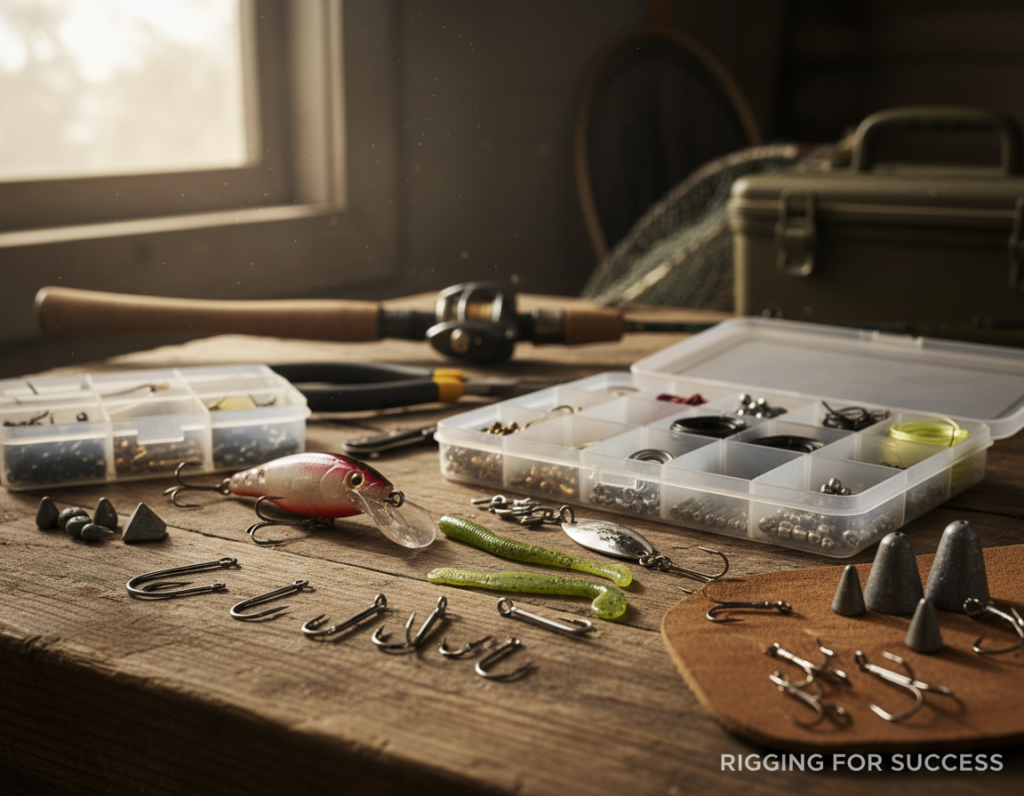
Hook types and sizes that cover most freshwater needs
For most U.S. anglers, two hook types do the heavy lifting: worm hooks for soft baits and treble hooks on hard lures.
Use a starter range of sizes (about 6–12) so you can match local fish quickly. Remember: a larger number usually means a smaller hook.
Terminal tackle essentials: weights, swivels, bobbers, and leaders
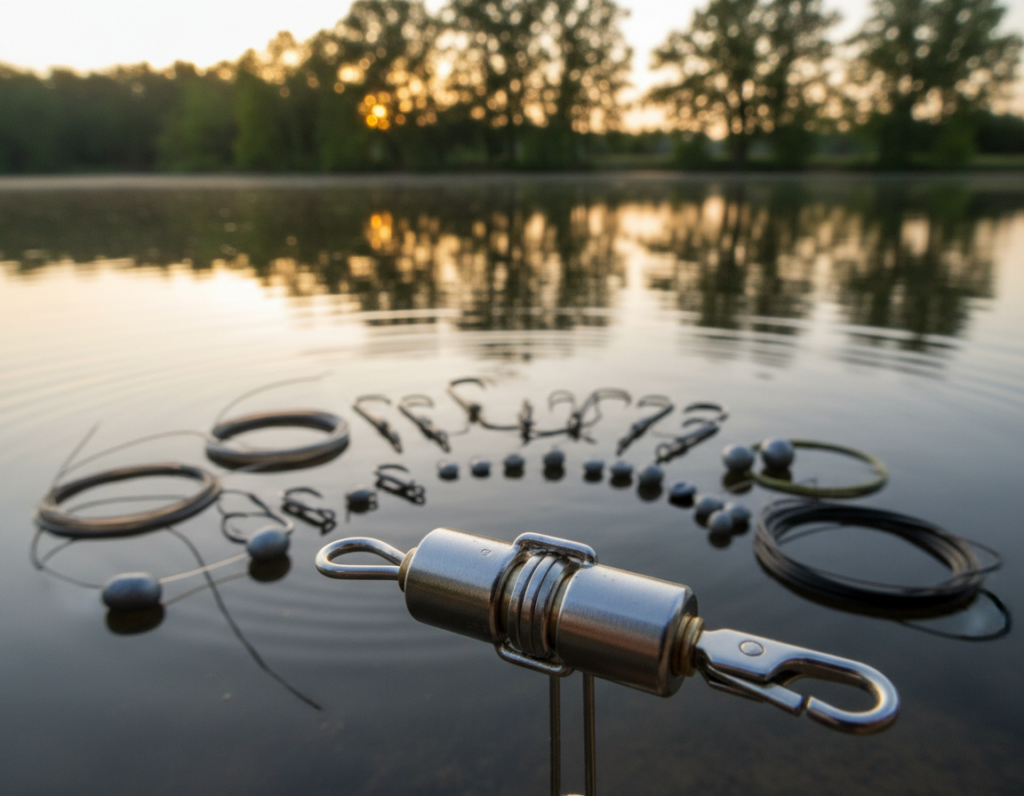
Terminal tackle is the hardware tied or slid directly to the line: hooks, swivels, weights, beads, bobbers, and leaders.
Pre-sort swivels and leaders into small packets. That lets you swap rigs fast without rebuilding from scratch.
Keeping bait near the bottom with sinkers and choosing practical weights
Sinkers get bait to the bottom and hold it there. The right weights speed casting and cut wind drift.
Carry a few common sizes so you can adjust for depth or current without much thought. Use the same pliers and cutters from your rig kit to trim, crimp, and swap hardware fast.
Baits, Lures, and Tackle Organization for Quick Decisions on the Water
A focused selection of baits and lures turns wasted cast time into productive searching. Hardbaits let anglers cover water fast by casting and retrieving to find active fish instead of soaking one spot.
Hardbaits that cover water fast
Crankbaits dive to a set depth via the bill, so you hit specific zones without constant rig changes. Jerkbaits use a slash-and-pause action that triggers strikes but requires quick treble-hook management—keep pliers handy.
Blade baits and spoons are metal workhorses. Both swim, jig, or twitch and excel in cool, deep water with tight vibration.
Softbaits for versatility
Worms, stick baits, grubs, craws, and swimbaits/minnows mimic forage and let anglers adapt presentations without swapping rods or reels. Rig profiles by depth and cover to stay effective.
Jigs and moving baits
Use flipping and pitching jigs for precise short pitches into cover. Football jigs hold rocky bottoms. Bladed jigs and spinnerbaits add vibration for moving-bait coverage; buzzbaits run surface searches when fish feed up.
Tackle box and storage tips
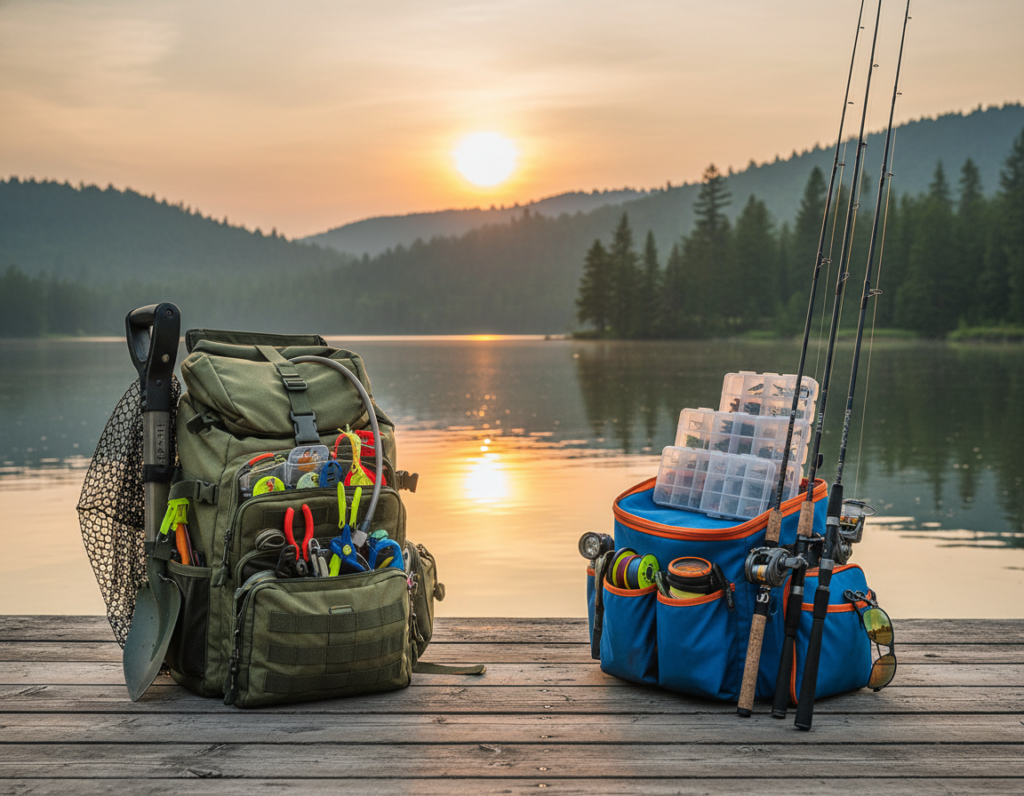
Organize by type: hardbaits separate from soft plastics; terminal tackle by size. Keep a compartment for spare split rings and a dedicated pocket for cutters and pliers.
“A neat box and a short confidence list of lures saves more time than extra gear.”
Conclusión
A few reliable pieces of gear streamline prep and cut downtime on every trip.
Keep the kit simple: needle-nose pliers with a cutter, a tidy tackle layout, and a rod/reel/line setup that matches your skill and local species.
Quick fish-care matters: faster hook removal and less handling improve survival and save time.
Organize lures by type so you can change presentations fast when conditions shift.
Start with the basics and upgrade deliberately. Pick one improvement—better pliers, smarter line management, or a neater tackle layout—and test it next time you head out.
For a short list of useful accessories and a practical best accessory summary, see the linked resource in this guide.

 Spanish
  English