
Anuncios
Did you know one simple oversight at the boat ramp can change a lake forever?
This short guide shows practical steps to protect water quality and support long-term conservation.
The Ontario Federation of Anglers and Hunters helped launch the Invading Species program in 1992. It grew into a vital resource that offers reporting via the Invading Species Hotline at 1-800-563-7711.
Boaters and hunters play a key role in prevention. By cleaning a boat, gear, and footwear, you reduce the chance that aquatic invasive species move between lakes and rivers.
Every year volunteers and conservation groups invest time and support to keep our waterways healthy. Those efforts protect access to pristine sites for future outdoor users.
Anuncios
Read on to learn step-by-step cleaning protocols and simple habits that raise the quality of our shared water and strengthen conservation work.
Understanding the Threat of Aquatic Invasive Species
Small, unnoticed hitchhikers on gear can create big, long-term changes in freshwater habitats.
What we call invasive species are plants, animals, and microorganisms moved by people beyond their natural range. The Government of Canada defined these organisms in 2004 as those whose spread threatens the environment, economy, or society.
Anuncios
Defining Aquatic Invaders
Aquatic invasive plants can crowd out native vegetation. They slow water flow and change oxygen levels. Invertebrates like crayfish and mussels compete for food and destroy spawning habitat.
Ecological Impacts
Forest pathogens also matter: they damage trees and alter nutrient cycles that feed nearby water and habitat.
- These organisms can alter freshwater ecosystems and reduce water quality.
- Effective management requires ongoing conservation efforts from hunters and outdoor users.
- Each year, dedicated volunteers support monitoring and control to protect wildlife and public access.
Your time and care make a difference. Learning the risks helps protect habitat quality and keeps our shared waters healthy for future access and use.
Why Invasive Species Awareness Fishing Anglers Matters
Local anglers and hunters often spot new aquatic threats first, simply by spending time on the water.
The Invading Species Awareness Program targets the main pathways that move harmful organisms between waters. Outreach helps anglers learn rules and practical habits that protect water quality and preserve access for everyone.
Anglers are critical partners in early detection and monitoring. Reporting sightings through the hotline, 1-800-563-7711, gives wildlife managers real-time data to act fast.
Public engagement fuels conservation efforts. Each year, volunteers and local fishing enthusiasts spend time surveying shorelines, sharing observations, and offering support to restoration teams.
- Recreational users often spot new threats first and can report them quickly.
- Hunters and anglers provide on-the-ground help that raises environmental quality.
- Understanding risks helps every angler protect habitat and long-term access.
Identifying Common Invasive Threats in Our Waters
Small hitchhikers on boots, boat hulls, or live wells can start major problems for freshwater systems.
Know the usual culprits so you can spot them fast. Zebra and quagga mussels are freshwater bivalves from the Black Sea region that filter out nutrients and foul gear. Rusty crayfish, common in the Ohio River Basin, chew up plants and destroy fish spawning habitat.
Zebra and Quagga Mussels
These mussels attach to hulls, motors, and traps. When they spread, they change water clarity and food webs. Look for small, striped shells on hard surfaces.
Invasive Carp
Silver and bighead carp compete with native fish for food and space. Populations in the Ohio River region can grow quickly and reduce habitat for other fish.
Aquatic Plants
Plants like European water chestnut and water soldier clog channels and push out native vegetation. The Invading Species Awareness Program offers ID guides and yearly support to help the public report sightings via invasive species in US waters.
- Species like zebra mussels filter vital nutrients and harm water quality.
- Carp often outcompete native fish for food and habitat.
- Hunters and conservation groups play a key role in early detection and reporting.
How Recreational Gear Acts as a Transport Pathway
Hidden pockets in boats and boots often move unwanted life from one water body to another.
Pathways are the physical ways people move organisms, intentionally or by accident. Recreational boats, damp waders, and tackle boxes can hide tiny fragments, eggs, or larvae in crevices. Moving wood, ballast water, and live bait also contribute to spread.
The Invading Species Awareness Program urges users to clean, drain, and dry equipment between trips. Trail use and scuba gear create additional routes when mud or plant bits cling to gear.
- Recreational gear acts as a primary pathway because organisms can hide in damp compartments and boots.
- Conservation hunters and other outdoor users stop the spread by inspecting and cleaning gear after every trip.
- Each year the program provides support and guidance to protect water quality and wildlife habitat.
By taking a few minutes to inspect equipment, you help close pathways and protect access to healthy waterways. Our collective efforts preserve habitat quality and strengthen conservation over time.
The Role of Live Bait in Ecosystem Disruption
Leftover bait released after a day on the water can carry non-native fish into new habitats.
The live bait trade is a high-risk pathway that moves organisms past barriers like dams. Research near Gavins Point Dam found 70% of anglers used live baitfish and 57% practiced higher-risk release behaviors.
Risks of Releasing Baitfish
Releasing unused bait or bait buckets can put bigheaded carp and other harmful fish above barriers. Only 2% of surveyed anglers could correctly identify bigheaded carp in an image collage.
- Use live bait carefully: many users unknowingly move non-native organisms into ecosystems.
- Tank et al. (2024) shows release is common and threatens native fish and wildlife habitat.
- Dispose of bait in the trash instead of releasing it to protect water quality.
Take time to act. Conservation programs offer support year-round to educate the community. By stopping live bait release, hunters and anglers help protect native fish, habitat, and long-term access.
Essential Steps for Cleaning Your Watercraft
Taking minutes to empty and inspect your craft keeps local habitat healthy and resilient.
New regulations now require users to clean and drain boats and gear after they leave the water. These rules help prevent transport of unwanted material between lakes and rivers. Follow the simple steps below each time you launch or retrieve your vessel.
Drain Plugs and Live Wells
Always pull drain plugs before towing. Empty live wells and bait buckets on shore. Standing water inside a hull or tank can carry eggs, larvae, and plant fragments.
The Volunteer Water Steward Program offers hands-on demonstrations at public ramps. They show quick checks that meet regulation standards and protect habitat.
Removing Debris
Inspect spaces where mud and plant bits hide: bilges, transom wells, anchors, and trailer bunks.
Remove any animal or plant material and rinse with hot or high-pressure water when available. Proper decontamination is a fast, effective way to guard our shared natural resources.
- Clean your boat and remove all debris to prevent spread between waters.
- Conservation hunters and anglers should always pull drain plugs and empty live wells to keep water quality high.
- The Volunteer Water Steward Program supports these efforts with training at launches.
- Consistent checks protect wildlife, habitat, and access for everyone.
Best Practices for Decontaminating Waders and Boots
Waders and boots move more than mud — they can carry tiny hitchhikers that survive days on damp fabric.
Check, scrub, disinfect, and dry. New Zealand mudsnails are small, dark, and hard to spot on felt soles and neoprene. Research on the Pere Marquette River found only 44% of anglers cleaned waders between trips.
Signs at access points remind users to clean gear before leaving a site. Use a brush to remove visible mud and plant fragments. Then apply a recommended chemical disinfectant or soak per label instructions.
“Take time to scrub and dry your boots — it is one of the simplest acts that protects our streams and fish.”
- Remove mud and organic material on-site; rinse in hot or high-pressure water when available.
- Use approved disinfectants and allow full contact time to kill microscopic organisms.
- Dry gear completely for several days; damp materials can harbor survivors for weeks.
- Conservation groups and hunting clubs often provide cleaning stations at ramps and access points.
Every angler and fisher can help preserve habitat and water quality. Small, consistent efforts stop accidental transport and protect native fish and the outdoor places we value.
Managing Invasive Species Through Proper Disposal
How we discard bait, plants, and debris determines whether local water stays healthy or degrades.
Proper disposal is a core management step in the Invading Species Awareness Program. Removing leftover bait, plant fragments, and any biological material stops further spread of invasive species between lakes and rivers.
The program partners with property owner associations in places such as Haliburton to remove targets like mysterysnails safely.
Some removals need training or a Licence to Collect Fish for Scientific Purposes. Call the Invading Species Hotline for specific guidance on safe disposal and local rules.
- Proper disposal prevents harmful organisms from entering new habitat and protects water quality.
- Conservation and hunting groups help by making sure no biological material is left at access sites.
- Public cooperation is essential; our collective efforts keep wildlife and habitat healthy.
“Following disposal protocols is the simplest way the public can support long-term conservation.”
Navigating Regulations and Reporting Protocols
Knowing how to follow regulations and report sightings keeps our waters safer.
New rules require users to clean, drain, and dry craft and gear before moving between bodies of water. These regulations protect native fish, wildlife, and habitat by closing common transport pathways.
How to Report Sightings
Report unusual plants or animals quickly to enable fast response. The Invading Species Hotline, 1-800-563-7711, is the primary phone resource listed on many outreach materials.
- Use EDDMapS Ontario to map a sighting online; it is simple and requires no technical skills.
- Call the hotline for urgent reports or to get local rules and reporting information.
- Follow local regulations when handling or removing material to protect habitat quality.
- Timely reports let managers track spread and launch control or monitoring efforts.
By learning the rules and using tools like EDDMapS Ontario or the hotline, you help conservation work. Quick action supports long-term water quality and the health of native fish and other wildlife.
The Importance of Drying Gear Between Trips
A brief drying routine at home can stop tiny organisms from moving from one stream to another.
Drying gear is one of the most effective ways to kill organisms that survive in damp fabric and crevices. New Zealand mudsnails can live for weeks in limited moisture, so air drying matters.
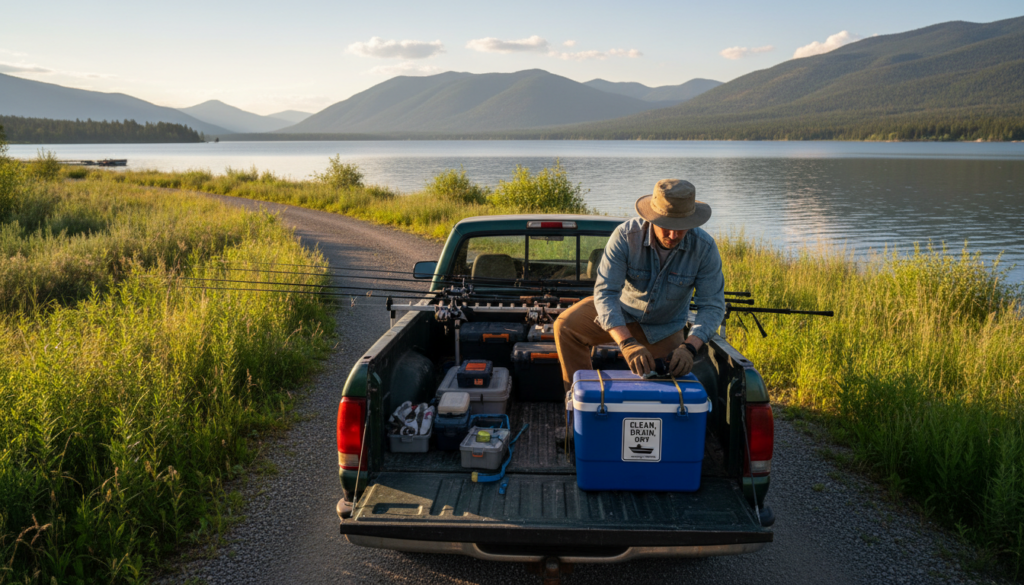
The national “Clean, Drain, Dry” campaign promotes simple habits: clean off debris, drain standing water, then dry gear completely. Sunlight and warmth speed the process and reach hidden pockets on boots, nets, and waders.
For anglers and other users, consistent drying is a low-cost method for protecting habitat and water quality. By preventing spread between trips, you reduce risk to native fish and local wildlife.
- Dry gear thoroughly in the sun for several days when possible.
- Make drying a routine after every outing to aid conservation efforts.
- Small steps by each angler help protect habitat and keep water healthy.
Engaging with Local Conservation Programs
Community programs make it easy to turn concern into meaningful action.
Join groups that train boat users and volunteers to protect water and habitat. The ISAP Ambassador program supports student-led projects and club activities. The Volunteer Water Steward Program holds demos at public launches so boat operators learn rules and quick checks.
Other efforts include the Wild Pig Surveillance Program, which supplies kits for volunteers, and the Water Soldier Eradication Project, which coordinates monitoring and control across agencies.
- Get trained and use simple monitoring tools to help protect water and wildlife habitat.
- Volunteer at public launches to learn best practices and share knowledge with your community.
- Join coordinated removal or monitoring projects to support long-term conservation goals.
“Local volunteers are the first line of defense for our lakes and forests.”
By taking part, you help preserve habitat and keep water healthy for future generations. Small, regular actions by many people power successful conservation work.
Overcoming Barriers to Behavioral Change
Short training, clear steps, and social nudges help convert intention into steady practice.
Knowing a problem rarely fixes habits on its own. Studies show that awareness alone often fails to prompt regular wader cleaning or consistent decontamination. Outreach must move past facts and into tools that shape daily choices.
Flowcharts and targeted messaging help outreach staff match actions to an angler’s readiness. Use the flowchart guidance to design steps for beginners, occasional users, and committed volunteers.
Social behavioral change is essential because there is no in-stream treatment available today. Programs that combine quick demos, peer champions, and visible cleaning stations make the right choice easier.
Understanding movement patterns and attitudes lets managers tailor messages so they stick. Conservation groups and hunting clubs can partner to model good practice and protect water and wildlife habitat.
“Make the safe habit the obvious habit: short, simple steps repeated by everyone.”
- Move beyond awareness to prompt consistent cleaning by every angler.
- Pair training with on-site supports like hoses, signs, and peer prompts.
- Effective management depends on shifting everyday behavior to protect water and conservation goals.
Utilizing Digital Tools for Species Identification
Smartphone apps and virtual lessons now help the public learn to ID threats in local water.
Use simple platforms first. EDDMapS Ontario is fast and easy to use. It lets users map and report finds with no technical skills needed.
The Invading Species Awareness Program also shares timely information via social media. Their channels reach over 300,000 people with tips, photos, and video lessons.
Virtual classrooms and short video modules help students and volunteers build ID skills. The hotline provides expert guidance when a report needs verification.
- Digital maps give clear steps to identify and report species and help managers track spread.
- Social media and online media spread accurate information fast to wide audiences.
- By using these tools you support early detection and protect local water and habitat.
Modern tools raise the speed and accuracy of monitoring. Using them makes it easier for everyone to contribute data and keep our waterways healthy.
Protecting Native Fish Populations and Habitats
Protecting fish and their habitat requires steady habits at every launch and shoreline.
Healthy native fish populations keep food webs balanced and support clean water for people and wildlife. When nonnative carp move in, they can outcompete local fish species and damage critical wildlife habitat.
The Sea Lamprey is an eel-like predator that once devastated Great Lakes fish numbers. Other aquatic invasive arrivals also prey on eggs or gobble food, so populations drop and fishing quality suffers.
Protecting native fish is a core goal of the Invading Species Awareness Program and partner groups. Their work helps restore habitat and monitor at-risk fish species so populations can recover.
“Every small prevention step helps keep native populations strong and our waterways resilient.”
- Keep gear clean and dry to limit spread between waters.
- Report unusual finds to local hotlines for fast response.
- Support habitat projects that restore spawning grounds and cover.
Future Strategies for Biosecurity in Fishing
Next-phase biosecurity emphasizes practical tools and public partnerships to protect water and fish.
Programs will expand targeted outreach and test new decontamination protocols. Managers aim to give every person clear steps that fit quick trips and long outings. That focus helps protect native fish and keeps recreation safe.
An inter-agency working group on water soldier will keep coordinating research, monitoring, and control. Ongoing wild pig tracking and other field monitoring feed adaptive management and guide priorities.
Developing low-cost, effective gear cleaning tools is a top priority. Better tools reduce the chance of spread and make prevention easier to practice every time users launch or leave shore.
- Future strategies will push innovative prevention methods to stop spread between waters.
- Adaptive management keeps our response aligned with new biological challenges.
- Continued collaboration with the public builds durable, community-led prevention networks.
“Shared work and better tools will keep fish populations healthy and our waterways resilient.”
Conclusión
Small daily habits add up to meaningful protection for our lakes and rivers.
Protecting water and native fish depends on each boat user and shore visitor. Follow clean, drain, and dry routines, check gear carefully, and report odd finds so managers can act fast.
The Invading Species Awareness Program offers tools and hotline support to help identify and report potential threats. When communities commit to these steps, we keep ecosystems healthy and maintain quality access for future generations.
Make the simple checks a habit: your care today keeps fish populations strong and preserves the places we all enjoy.

 Spanish
  English