
Anuncios
This method puts the weight at the end of the line and the hook above it, so the bait hovers in place while the sinker anchors the line. That simple setup creates a natural, weightless action that entices pressured bass and neutral fish alike.
Think of it as a precise presentation. Anglers use a drop shot fishing technique to keep bait in the strike zone longer and control depth with fine adjustments. Pros rely on a proper drop shot rig and small changes in leader length to trigger bites.
This article is a practical, start-to-finish guide for bass anglers in the United States. You’ll learn why it works, how it behaves in water, the best tackle, how to tie the rig, bait choices, and when to use each mode. Expect clear steps you can apply the next time and the right place and time to use this approach.
Why a Drop Shot Rig Triggers Bass When Other Presentations Stall
When other baits stop producing, the pinned weight lets a soft plastic act nearly unweighted and sit in front of bass longer. The weight functions as an anchor so the lure can quiver without dragging across the bottom.
Stillness plus micro-motion is often the cue pressured fish need. In clear or pressured lakes, aggressive movement spooks bass. A barely moving lure that flutters on a semi-taut or semi-slack line looks natural and easy to eat.
Anuncios
Compared with a Carolina rig, you don’t pull the weight and relocate the bait. Instead, you make the lure dance above grass and moss while the weight stays put. That “lure up” advantage keeps hooks clean and visible over abrasive bottom and rock moss.
- Abrasion logic: the business part of the line rides above debris, so you avoid frays from rock or mussel beds.
- Bite windows: many bass strike on the fall or when the bait hangs motionless because it triggers reflex or looks vulnerable.
When your jig or spinnerbait bite slows, switch to a finesse presentation that holds the strike zone longer. For more advanced bass methods, see advanced bass methods.
Drop Shot Fishing Technique Basics: How the Rig Works in the Water
A clear grasp of rig geometry and line feel helps you keep the bait where bass strike most often.
Anuncios
Hook-above-weight geometry and controlling bait height off bottom
The hook rides above the weight, and the chosen drop length is the dial that sets bait height off the substrate. Typical leader lengths range from 10″ to 36″, with 12″–14″ common when fish are near bottom.
Semi-taut vs semi-slack line and what each does to the lure
Semi-taut line keeps contact with the weight so you feel ticks and can maintain position. It lets the bait tremble while you still sense bites.
Semi-slack line feeds a small bow of slack so the lure undulates and drifts more freely. Use this when bass are neutral or the lake is calm.
Choosing leader length for bottom fish vs suspended fish
Short leaders keep the bait hovering just above bottom and target bottom-oriented bass. Longer leaders place the bait at the level shown on sonar for suspended fish.
- Regla de decisión: losing bottom contact or dragging too fast? Go more semi-taut or increase weight.
- If fish are spooky: ease to semi-slack and soften movements to reduce reaction strikes.
- Strike detection: bites can be a tick, a mushy weight change, or extra pressure—line management converts those into hookups.
| Leader Length | Primary Use | Typical Water Depth | Notas |
|---|---|---|---|
| 10″–14″ | Bottom hugging bass | 2–15 feet | High contact, quicker hook sets |
| 18″–30″ | Suspended bass | 10–40 feet | Keeps bait at fish level; use electronics |
| 30″–36″ | High schools or deep suspends | 20+ feet | Slower sink, more drift; watch rod angle |
Nota: leader length, line type, and rod action all interact with how the rig behaves in the water and will be covered in detail in the next section on tackle setup.
Tackle Setup for Bass: Rod, Reel, Line, and Leader Choices
A clean tackle setup makes the difference between a missed tap and a solid hookset.
Rod and reel. Start with a 6’6″–7′ medium-light to medium spinning rod for most U.S. lakes. That length balances cast control and leverage for light weights and small baits.
Match it to a smooth spinning reel with good line management and a dependable drag. A consistent pickup helps whether you fish vertically or cast long.
Line and leader systems
Braid-to-fluorocarbon is the common choice. Spool 10–15 lb braid on the reel and tie on about 6–10 ft of lighter fluorocarbon leader.
Braid reduces stretch so hook penetration stays strong in deep water. Fluoro keeps the leader low-visibility near the bait and adds abrasion resistance around rock.
Light line in current and clear water
In current or wind, use thinner diameter line so the weight finds bottom. In clear water, lighter line and a longer leader improve stealth.
Managing stretch and hooksets
Use a firm, controlled sweep for hooksets rather than an exaggerated yank. Braid transmits taps well, but avoid overpowering short fluoro leaders to prevent breakoffs.
| Component | Typical Choice | Por qué ayuda |
|---|---|---|
| Rod | 6’6″–7′ ML–M spinning | Precision casts, good hook leverage |
| Reel | Spinning, smooth drag | Line control and consistent retrieve |
| Line | 10–15 lb braid | Low stretch for deep hooksets |
| Leader | 6–10 ft fluoro (lighter) | Stealth, abrasion resistance |
Quick adjustment ladder: lose feel → heavier weight or thinner leader; fish spook → longer leader or lighter line; breakoffs → upgrade leader abrasion rating.
How to Tie and Build a Drop Shot Rig That Presents the Hook Correctly
Start by tying the hook first with a Palomar knot and leave a long tag end. Pass the line through the hook eye, double the line, and finish the knot so the loop sits snug. Intentionally keep the tag long—this becomes your drop line to the weight and lets you set bait height without rebuilding the whole rig.
Make the hook stand out. After the knot, thread the tag end back through the hook eye from the top down so the hook points away from the line. That orientation improves hookups and keeps the bait clear of the leader.
Attach a sinker with a pressure clip-style weight when possible. Use weights in the 1/16–1/2 oz range to match depth, wind, and current. Pressure clips let you swap sizes quickly and often save the rig when a snag takes only the weight.
Choose cylindrical weights where rock, timber, or zebra mussels are common—cylinders snag less than round shapes. Pick just enough weight to hold bottom contact without wedging the bait and killing action. Keep the connection segment above the substrate to reduce abrasion and hang-ups.
- Tie: pass line through eye, tie Palomar, leave long tag.
- Orient: thread tag back through eye top-down so the hook stands out.
- Attach: pressure-clip weight sized for conditions; swap as needed.
Quick presentation check: pull tension and confirm the hook rides horizontal and the bait sits above the bottom at your intended height. Adjust tag length, weight, or knot snugness until the rig behaves consistently on the retrieve.
Hook and Bait Selection for Drop Shotting Bass
A well-matched hook and soft plastic makes the presentation irresistible to wary bass.
Nose hooking is best for open water and when you want maximum action. Nose-hook small minnow baits or soft plastic darts so the lure swims freely. Light, short-shank finesse hooks punch through and convert more taps into hookups.
Texas rigging trades some free action for weedless performance around wood and grass. Use light-wire straight-shank hooks to hide the point and keep your plastic from snagging. This is the choice when cover is thick.
- Hook sizes: common range is #2 to 2/0—match hook gap to bait thickness so the point clears on a hookset.
- Action types: darting/gliding minnow lures (Jackall Crosstail, Yum Kill Shot) trigger reaction bites; undulating worms (Roboworm Straight-Tail) breathe on subtle shakes for cautious bass.
- Color logic: use shad tones for baitfish lakes, goby patterns for smallmouth water, and muted greens/browns in pressured fisheries.
Water clarity guide: clear water favors smaller, translucent profiles and natural hues; stained water allows bolder colors and larger baits.
Keep it simple: the rig’s presentation is primary. Bait choice fine-tunes results once depth and cadence are correct.
Core Presentations That Catch More Bass on a Drop Shot
Small, repeatable moves often outfish flashy work when bass refuse to chase. Pick a cadence that keeps the bait in the strike zone and makes the lure look easy to eat.
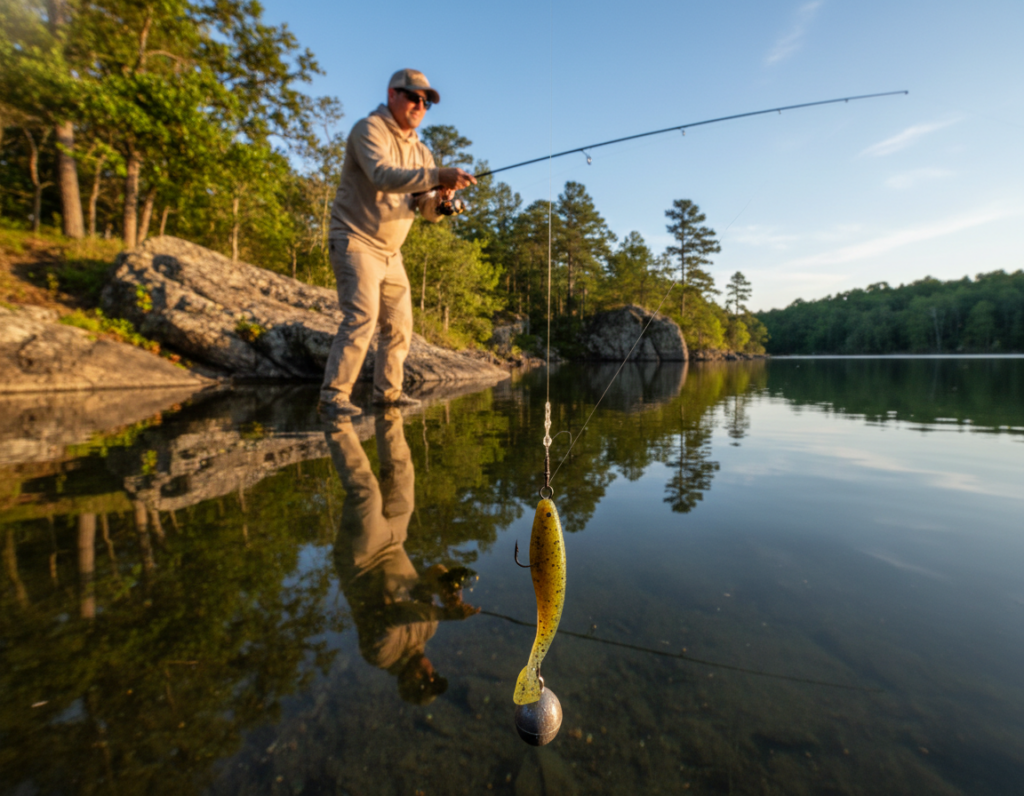
The subtle shake that moves the bait without moving the weight
Keep the weight pinned and use light rod-tip twitches so the lure quivers while the sinker stays put. This lets current and the lure’s profile do the rest.
Deadsticking for locked-down bass and how long to pause
After the sinker hits bottom, let the bait settle and pause 10–20 seconds. Then lift gently and let it fall again.
“I often wait long pauses between moves; spring leader lengths of 4–10 inches and falls of 15–20 inches in fall help.” — Aaron Martens
Dragging and vertical methods
Drag the rig slowly like a Carolina approach to comb points, ledges, and reefs without plowing the bottom.
When you see fish on electronics, drop straight down and hold the bait in their face. Many strikes happen on the fall, so controlled descent can be enough.
- Default: subtle shakes for neutral fish.
- Deadstick: use when fish are present but inactive.
- Drag: cover widely on structure.
- Vertical: work fish seen on the screen.
Best Times and Places to Drop Shot for Bass in US Lakes and Reservoirs
Knowing where bass hold at different times of year turns a simple rig into a precision tool on deep structure. Use this to pick a place and time before you cast.
Deep structure, pockets, and transitions
Map points, ledges, humps, and reef edges where bass scatter along depth changes. These depth transitions are prime places to hold a tiny bait just above the bottom.
Suspended fish and standing timber
In many reservoirs and clear lake pockets, bass sit suspended under bait schools or above standing trees. A hovering bait that falls slowly often triggers bites from those fish.
Bed fishing and delicate presentations
When bass are on beds, the rig lets the lure quiver without pulling the fish away. Use short leader lengths and subtle lifts so the bait stays in the sweet spot.
When to avoid light presentations—and when to punch through
Avoid finesse rigs in impenetrable heavy cover where light line can’t land fish. In those spots, the exception is a stronger “bubba” approach: upsize the weight to punch into grass cavities and use heavier hooks and line.
| Place Type | When to use | Key setup |
|---|---|---|
| Deep points & ledges | Post-spawn, summer deep water | Long leader, light weight to hover over bottom |
| Reservoir pockets & guts | Transition periods, moving baitfish | Controlled drop length, steady contact |
| Standing timber & suspended schools | Summer and fall suspends | Delicate fall, sensitive rod tip |
Drop Shot Strategies for Current, Wind, and Shallow Cover
When current or wind pushes the water, small adjustments keep the bait ticking where bass feed.
Drift with the flow
Cast upstream and let the current carry the rig so the sinker ticks bottom naturally. The goal is a light, repeating tap—not a long hang or a drag against the flow.
Dial the right sinker weight
Too much weight hangs and kills action. Too little sweeps and never contacts the bottom. In 5–10 feet, try 3/16–1/4 oz to balance drift and contact. In stronger or deeper current move to 3/8–1/2 oz.
Wind, line angle, and shallow pitching
Boat position and slight tension control line angle in wind so you still feel taps. Thinner line cuts current and reduces bow, helping the weight reach bottom and improving feel.
Pitch to tight cover
Use a spinning outfit to pitch to docks, pilings, laydowns, bushes, and grass edges. Aim for an 8-inch leader on shallow targets, let it hit, shake lightly, then pause 10–15 seconds. Repeat and move lanes like a jig bite approach.
| Depth | Suggested weight | Action tip |
|---|---|---|
| 4–8 feet | 3/16 oz | Pitch to pilings; shake & pause 10–15s |
| 5–10 feet | 3/16–1/4 oz | Cast upstream; let sinker tick bottom |
| 10+ feet / strong current | 3/8–1/2 oz | Increase weight to maintain contact |
Troubleshooting and Fine-Tuning Your Drop Shot Fishing
Common rig faults are simple to diagnose and fix. A quick checklist saves time and keeps more fish on the line.
Line twist: why it happens and how to reduce it
Twist often builds while you retrieve, not while you twitch the bait. Look for coils or small wind knots on the spool; those signs mean torque is accumulating.
Fix it: reel slowly and steadily after each presentation to limit spin. Occasionally let free line out behind the boat at idle to unwind coils. Consider braid as your main line; it resists twist better than fluoro and protects the leader.
Snags and break-offs: protecting the connection
Use cylindrical weights near rock and keep the sinker just heavy enough to hold bottom contact. Pressure-clip sinkers let you lose only the weight on a snag.
Check your leader for nicks after dragging across rock or mussels. Retie the knot when you spot damage—don’t wait until the next big fish puts stress on the connection.
Adjusting drop length seasonally and by fish mood
Shorten the distance when fish hug the bottom or cover. Lengthen the leader when fish suspend and prefer a slower fall.
Pros often run ~4–10 inches in spring and ~15–20 inches in fall. If you miss bites, try downsizing the hook, slowing cadence, and lengthening pauses. If you snag frequently, change weight shape, lighten slightly, or alter angle until contact improves.
Conclusión
The main point: the drop shot keeps a natural bait in the strike zone while the weight holds position, so wary bass have more time to commit.
How to win: orient the hook with a Palomar and tag back through the eye, set your leader length to the fish depth, and keep disciplined line control for consistent feel.
Prioritize a sensitive spinning rod, a smooth reel, and a braid-to-fluoro leader system to improve hooksets and landing rate—especially in deeper water.
Three go-to presentations: subtle shake-in-place, deadstick pauses for locked fish, and vertical drops when you see suspended bass on electronics.
Next steps: tie two rigs with different drop lengths, carry several weights for wind and current, and alternate a minnow lure and a finesse worm. Keep the bait in the right place longer and you’ll turn more almost-bites into fish on the drop shot.


 Spanish
  English