
Anuncios
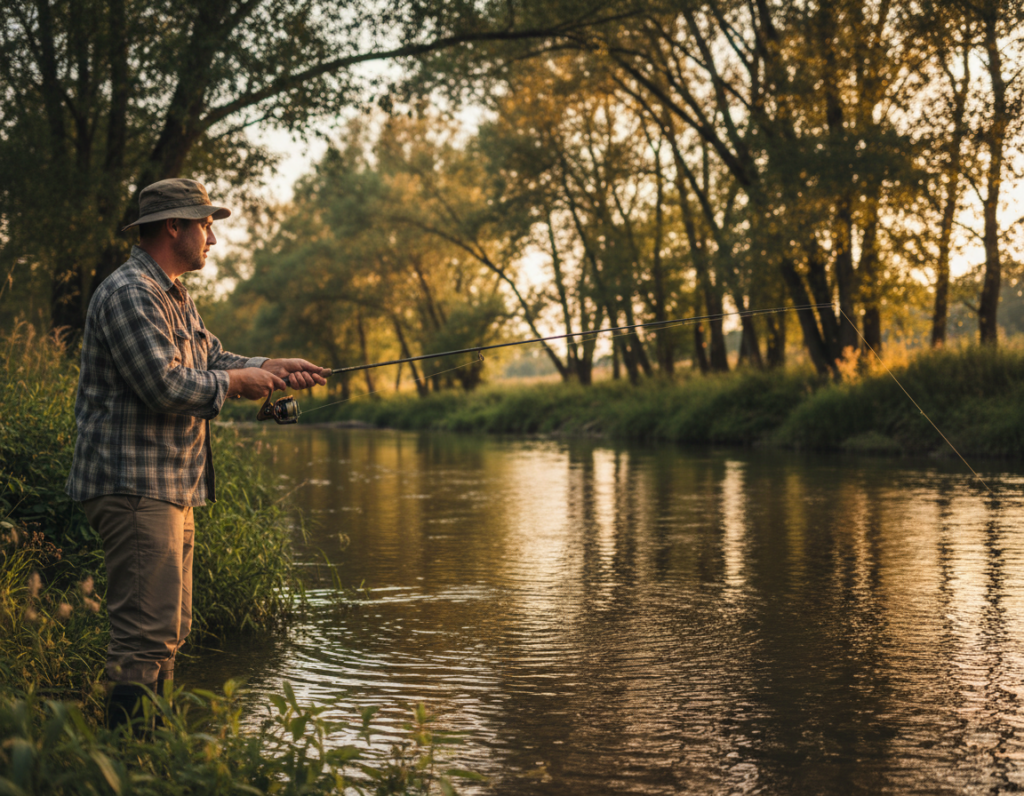
This guide shows practical shore approaches that help anglers catch more fish on U.S. lakes, ponds, rivers, and streams. It focuses on smart positioning, mobility, and a light, versatile gear system that beats hauling multiple rods and boxes.
Expect honest advice: you can’t run and gun like a boat angler, so success comes from choosing high-percentage bank areas and making every cast count. Learn to read water, spot cover, and present baits at the right angle to contact fish-holding structure.
This article previews a clear framework: timing and conditions, water levels, reading structure and cover, casting angles, lure choice, live bait and soft plastics, and a streamlined loadout. Mobility and patterning matter most—move until you find active fish, then exploit the pattern along similar banks.
Modern note: drought-driven low water exposes structure and creates new chances from shore. Whether you’re a beginner chasing more bites or an experienced angler seeking a repeatable system, this guide aims to boost your catch rate with practical, present-day shore methods.
What Bank Fishing Is and Why It Works for Catching More Fish
Shoreline angling puts you where fish feed and hide, and it rewards smart movement more than heavy gear. Bank fishing means fishing from the edge of water—ponds, creeks, and lake margins—where feeding, spawning, and cover concentrate fish.
Anuncios
Shore vs. boat: strengths and limits
Pros: no boat cost, easy access to thick cover, and the ability to work small ponds and canals. You can reach shallow or snaggly spots a boat can’t.
Cons: reduced range offshore and fewer vertical presentations compared with a boat. You can’t reposition as fast, so each cast must count.
Mobility, access, and a scouting mindset
Access is both a constraint and a tactic: you target the best-looking bank areas instead of trying to fish everywhere.
Anuncios
- Treat the outing like a scouting trip: walk, observe, then fish.
- Rotate spots until you find active water—mobile anglers often out-catch those who sit all day.
- Pick sites with public easements, parks, canals, and small ponds for easy shoreline coverage.
Timing and conditions decide which shore areas will produce; the next section covers when to go.
When to Go: Timing and Conditions That Boost Shoreline Success
Timing is the invisible tool that turns ordinary shoreline spots into consistent producers.
Best times of day in warm weather are usually early morning and late evening. At low light, bass move shallow to feed and become easier to reach from shore.
Mid-day can still produce bites when shade, wind, or submerged cover concentrates fish. Watch for light wind that breaks the surface and cloud cover that extends active periods.
Seasonal windows that push fish shallow
Spring prespawn and spawn bring bass onto flats and edges. Fall sees feeding migrations that also favor nearshore water in many lakes and ponds.
Small bodies of water shift location by time of day: flats often hold fish at low light, while steeper shores can retain fish later in the day.
- Revisit the same spots at different times to find the daily window.
- Use cloud cover and steady temperatures as cues that fish will stay shallow longer.
Tie-in: changing water levels can override normal timing and move fish overnight, so the next section shows how level shifts rearrange where fish live along the shore.
How Water Levels Change Everything Along the Bank
Water level swings rewrite where fish live and how you should move along the shore.
High water: more cover, tougher access, and how fish use it
High water floods grass, brush, and trees, creating a lot of shallow cover close to shore.
Fish spread into this new structure and tuck tight to cover, which makes them harder to find from the bank. Walkable access often decreases because slopes and soft mud hide beneath the rise.
Low water: less cover, easier access, and why fish “group up”
When levels fall, cover shrinks and the remaining grass lines, laydowns, and depth breaks concentrate fish.
Predictability rises: fish group up near islands of structure and deeper holes, so a short walk can expose multiple productive spots.
What exposed shoreline reveals about bottom composition and travel routes
Exposed banks act like a map: hard, rocky edges usually continue underwater, while soft mud signals gradual drop-offs.
Look for darker water colors near shore—this often marks a hidden drop-off or trough where fish travel.
- Multiplier effect: water level alters available cover, usable structure, and how far fish can spread along banks.
- When reservoirs drop, take notes and photos over years to learn where underwater structure hides.
- Use exposed bottom clues to predict travel routes for future high-water windows.
Once you read levels, you can move deliberately and find fish by matching water, structure, and remaining cover.
Finding Fish From Shore by Reading Water, Structure, and Cover
Start with a short walk and your eyes; the best areas usually reveal themselves before you cast. Move along any public access and scan stretches that offer obvious change—where grass stops, rocks begin, or a fallen tree angles into deeper water.
Map grass lines, laydowns, and hard edges
Walk accessible stretches to mark likely fish-holding lanes. Note grass lines, laydowns, brush piles, riprap, and firm-to-soft transitions. Fish use those edges as travel routes; fish multiple angles from each hard edge.
Use polarized glasses to see nearshore structure
Polarized sunglasses (KastKing and similar) cut glare and reveal submerged weeds and isolated cover. When you can see the bottom, you make smarter casts and reduce wasted throws.
Identify drop-offs by color and confirm with sonar
Darker water near shore often signals a drop-off or channel swing; lighter water usually means flats or sand. When in doubt, confirm depth in feet with a castable sonar like the Lowrance Fish Hunter Pro to verify structure and fish marks.
- Quick scan routine: walk, mark two or three productive spots, then work them in order.
- Fish hard edges from different angles to intercept travel lanes.
- Use what you see to turn “bank fishing near me” scouting into repeatable results on new waters. For a deeper primer, learn to read your waters.
Bank Fishing Techniques for Casting Angles That Cover More Water
Angle your casts to control how long a lure stays in the strike zone—geometry wins more bites than brute force. Small changes in presentation alter how a cast runs along a break or through a flat. Learn to match angle to bank shape and water depth.
When to cast straight out on steep drops
On quick-drop shores, cast straight out to reach deeper water fast. That keeps a bait tracking down the break where fish often hold. Let the lure sink and reel to keep contact with the drop.
How to fish parallel on flats and shallow lakes
On flats, cast parallel to the shore so the lure stays in the strike zone longer. Work edges, weedlines, and shallow travel lanes. A long, slow retrieve keeps the lure near cover without exiting the zone.
Working a productive retrieve and bite detection
Use a simple retrieve menu: let it sink, slow-roll, hop, then pause for reaction bites. Match cadence to water clarity and fish mood. Watch the line on the fall, hold slight slack when needed, and set the hook decisively when the line ticks or jumps.
- Regla de decisión: if you can’t see the break, fan casts first; switch to parallel once you locate the depth line.
- Transition: once angle and retrieve click, pick lures that hold depth and cast well from shore.
Lures and Presentations That Consistently Produce from the Bank
Pick lures that cast far, track true, and keep contact when you must fish from shore.
Swimbaits on lead heads give long casts and firm bottom feel. Let them sink, then slow-roll or hop to match temperature. Use small profiles for clear water and larger ones when bass are relaxed.
Spinnerbaits help control depth and deliver clear bite cues. Count them down to the zone and watch your line for subtle twitches on the fall. Willow blades for speed, Colorado for vibration in stained water.
Squarebill crankbaits excel tight to shoreline cover. Work them parallel to the bank so they deflect off wood and rock and trigger reaction strikes.
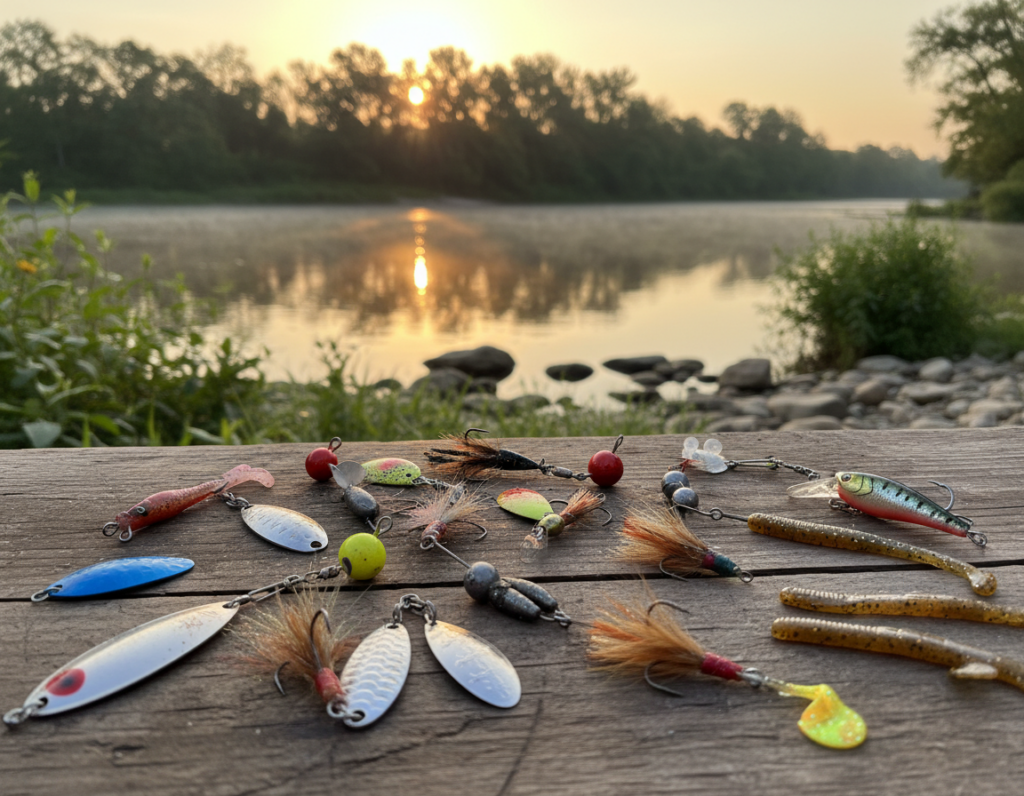
Color rule: bright and reflective on sunny days; darker silhouettes on overcast or murky water. When local baitfish are obvious, match the hatch.
“Choose lures that cover water fast and still tease a bite when space is tight.”
- Use crayfish-style patterns in shallow rock or hard-bottom zones when fish sit tight to cover.
- Keep rod tip low, make long casts, and maintain contact so the smallest taps register on the line.
Live Bait and Soft Plastics for Shoreline Fishing in Lakes and Streams
Mixing natural presentations with slow plastics gives shore anglers a dependable way to cover depth and mood. A simple bobber-and-hook is often the most productive starting setup for lakes, ponds, and streams.
Bobber depth ladder and when to go deeper
Start about 1.5 feet below the bobber. If no bites, raise depth in one-foot steps up to about 5 feet.
If still slow, remove the bobber and let the live bait sink or swim free for deeper-holding fish.
Best live bait and when to upsize
Nightcrawlers draw multiple species and work great when fish feed near cover. Use live shiners to target bigger predators; larger bait can trigger larger fish that ignore smaller offerings.
Soft plastics that work year-round
Senko-style stick baits give a slow, tempting fall near cover. Ned rigs offer a subtle bottom presentation for pressured fish. Big 10-inch worms are ideal for dragging through grass or probing deeper edges.
- Choose live bait when fish are neutral or for teaching new anglers; use artificials for covering water or when fish are active.
- Keep terminal tackle simple, focus on depth control, and retie after snags or fish.
- In small lakes suspend near visible cover; in streams drift through pools and undercuts.
“Natural baits and slow plastics fill the gaps reaction lures leave.”
Bank Fishing Gear and a Simple Loadout for a Higher Catch Rate
Carry only what matters and you’ll cover more shoreline with less fatigue. Mobility is the main advantage for shore anglers, so keep gear minimal and organized. A light pack means more moves and more chances to find active water.
Pack light with a backpack or sling
Choose a small backpack or sling so your hands stay free for rods and landing fish. Bring pliers, scissors, leader material, sunscreen, and sunglasses; these save time on the bank.
Leave at home: oversized boxes, duplicate lures in every color, and specialty tools you rarely use.
Two-rod system that covers most days
One spinning rod (~7–7.5′ medium) with a 3000–4000-size spinning reel handles finesse work: Ned rigs, wacky rigs, soft drops. One casting rod (~7–7.5′ medium-heavy) with a high-speed reel (7:1+) covers power baits and fast retrieves.
This pair covers nearly every shore scenario without weighing you down.
Line strategy and a practical tackle plan
Run a braided main with a fluorocarbon leader for distance, sensitivity, and abrasion resistance near cover. Adjust leader strength by water clarity and structure.
- Top: a couple of topwater plugs for low-light windows.
- Middle: swimbaits and crankbaits to match baitfish.
- Bottom: a jig and a key soft plastic for holds and brush.
Optional tech: a castable fish finder can confirm depth and structure quickly. Use it as a complement to reading water, not a replacement.
Conclusión
The clearest route to more bites is a steady routine: scout, select, and work the right angles. Read the shore first—note water color, grass lines, and exposed structure—then cast with purpose.
High water spreads fish into cover; low water concentrates bass near remaining structure. Adjust your target area and presentation to match those shifts.
Plan one simple trip: pick a lake, mark 3–5 productive spots, rotate them, and refine your cast angles (straight out vs. parallel) until a pattern shows. Carry a tight lure and bait lineup that covers the column and stick with it.
Shore anglers won’t reach every spot a boat can, but with mobility, smart choices, and notes over years you will catch fish more often.

 Spanish
  English