
Anuncios
This short guide shows anglers how to stop guessing and start finding bass by reading real cover in the lake.
Frank Scalish frames offshore work as the key most anglers avoid. Bass need cover and often travel along contours like roads. In many waters about 10% of the lake holds most bass, and those spots usually tie to obvious structure.
The goal here is simple: identify productive rock and log areas, pick the best cover on that feature, then use repeatable boat position and casting rules to keep your lure in the strike zone.
We’ll teach a clear workflow: read bottoms with maps and 2D sonar, pick seasonal depth zones, set angles to fish edges, then match rigs and lures for rock and wood cover.
This article uses modern electronics—2D sonar, side imaging, GPS—but also offers shore clues for anglers without gear. Expect practical, repeatable steps to find the right spot, know when to move, and trigger more bites.
Anuncios
Structure vs. Cover: What Rocks and Logs Really Mean to Fish
Bass follow the lay of the lake more than isolated objects. Read the bottom first, then judge what wood or rock adds to that pattern.
Bottom contour is the map; material on it is the target
Structure refers to changes in the bottom — ledges, points, humps, and channels. Cover is what sits on that contour: stumps, laydowns, rockpiles, or weeds.
Think river ledge vs. stumps. The ledge moves fish; the stumps give them a place to hide and strike.
Anuncios
Why bass use lines and ambush edges
Bass treat major contours like underwater highways. They travel along the contour, hold just off the lip, and ambush prey at transitions.
Edge thinking matters: target lips, turns, and transition zones first because they concentrate fish and create repeatable cast lanes.
How “quick” depth change varies by lake type
Paul Crawford reminds anglers that “quick” is relative. In many reservoirs a five-foot drop over a short run is a clear break.
In very flat natural lakes, a six-inch to two-foot change can be a major trigger. Subtle bottom shifts there often beat obvious shoreline marks.
On the water: identify the structural type, confirm the best cover, then lock onto the key edges to fish.
| Característica | What it is | Por qué es importante |
|---|---|---|
| Point | Bottom narrows into shallower ground | Channels funnel prey past the point; bass stage on the edge |
| Ledge | Sharp drop or lip | Creates a highway for travel and an ambush zone at the lip |
| Hump | Shallow rise inside deeper water | Concentrates forage; cover on top becomes a strike magnet |
| Channel/Break | Long, deep trough or swing | Fish move along it; rocks or wood along the break hold bass |
Find the Right Areas Faster With Maps, Shore Clues, and Electronics
A quick map scan and a brief pass with your depth finder will save you hours. Start by using contour maps to shortlist points, ledges, humps, creek channels, and channel swings that sit in your target depth zone. Then verify those candidate areas on the water with a depth finder before you commit.
Using contour maps and a depth finder to locate points, ledges, humps, and channels
Read contour spacing: tight lines mean a sharp break; wide spacing means a gentle taper. Both can hold fish depending on season and clarity.
Fast scan method: map shortlist → run the locator along the contour → mark promising spots.
Identifying breaklines, inside turns, and outside bends that concentrate fish
Breaklines are the path of the drop. Inside turns and outside bends become natural collection points where bait piles and bass wait with quick access to deep water.
Boat examples: follow a channel edge along a flat, check where a creek meets a point, then inspect nearby humps or saddles.
Dialing in the “spot on the spot” with side imaging and GPS waypoints
The “spot on the spot” is the small high-percentage detail inside the larger feature — a rockpile on a point, a log at the channel lip, or a hard-bottom patch. Mark it with GPS and return to fish it precisely.
Side imaging workflow: idle at safe speed, sweep both sides, drop waypoints on isolated cover, then run back later to fish those marks.
When to move on if a structure looks right but doesn’t produce
If the map matches the target but you see no bait, no sonar marks, and you get no bites after trying angles and depths, move to the next waypoint. Time is limited; staying mobile often finds the one productive spot.
| Acción | What to check | Por qué es importante |
|---|---|---|
| Map shortlist | Points, channel swings, humps | Focuses your search and saves time on the lake |
| On-water verify | Depth contours and contour spacing | Tells you if the map feature is sharp or flat and fishable |
| Imágenes laterales | Rockpiles, logs, hard-bottom patches | Finds the exact spot to mark with GPS |
| Move-on test | Bait presence, fish marks, bite returns | Protects time and increases chance of locating productive areas |
Pick a Depth Zone: Water Clarity, Forage, and the Thermocline
Water clarity and forage shape the depth bands that hold the most fish. Start by noting visibility, bait location, and general lake type before you commit to a depth range.
Clear water usually pushes fish deeper; dirty water often keeps them shallow
In clear reservoirs, Frank Scalish sums it up: “the clearer the water, the deeper the fish.” That means bass will hold off the edge and use deeper water to feel safe.
In muddy or stained water, expect bass to hug shallow cover and feed more aggressively near 10 feet or less.
Matching cover choice to forage: shad and alewives vs. perch and crawfish
Pelagic bait like shad or alewives pulls fish toward open edges, points, and humps where the bait schools. When you see suspended bait, focus on the nearest edge or drop.
Bottom-dwellers like perch, gobies, and crawfish keep bass low and tight to rock and gravel. If your sonar shows bait near the bottom, prioritize bottom-contact lures and hard transitions.
Finding the thermocline on sonar and why you usually won’t fish below it
Increase sensitivity or gain in manual mode until a fuzzy band about 2–3 feet thick appears. Treat that as the thermocline and plan to fish at or just above it.
Oxygen drops below that layer, and Paul Crawford notes fish rarely sit under the lower band. Re-check the thermocline when you move long distances or change basins; it can shift within the same lake.
- Starting ranges: shallow water = 10 feet or less; summer bass often use mid-depth to deeper water above the thermocline.
- Seasonal rules: summer – thermocline controls ceiling/floor; fall – bait moves shallower; winter – steeper drops near stable depth matter most.
Structure Fishing Technique: Boat Positioning, Casting Angles, and Working Edges
Small changes in boat placement and cast angle can trigger bites that were hiding minutes before. Good boat work keeps your lure in the strike zone and saves time on the water.
Setting top lip vs. bottom edge
Choose top lip or bottom edge to maximize time in the strike zone
Set the boat in deeper water and cast up onto the top lip so the lure works down the break. That way the bait stays in contact longer and avoids crossing the feature too fast.
Make a second pass closer to the top edge to probe the bottom edge thoroughly. This two-pass rule helps you cover both parts of the line where bass hold.
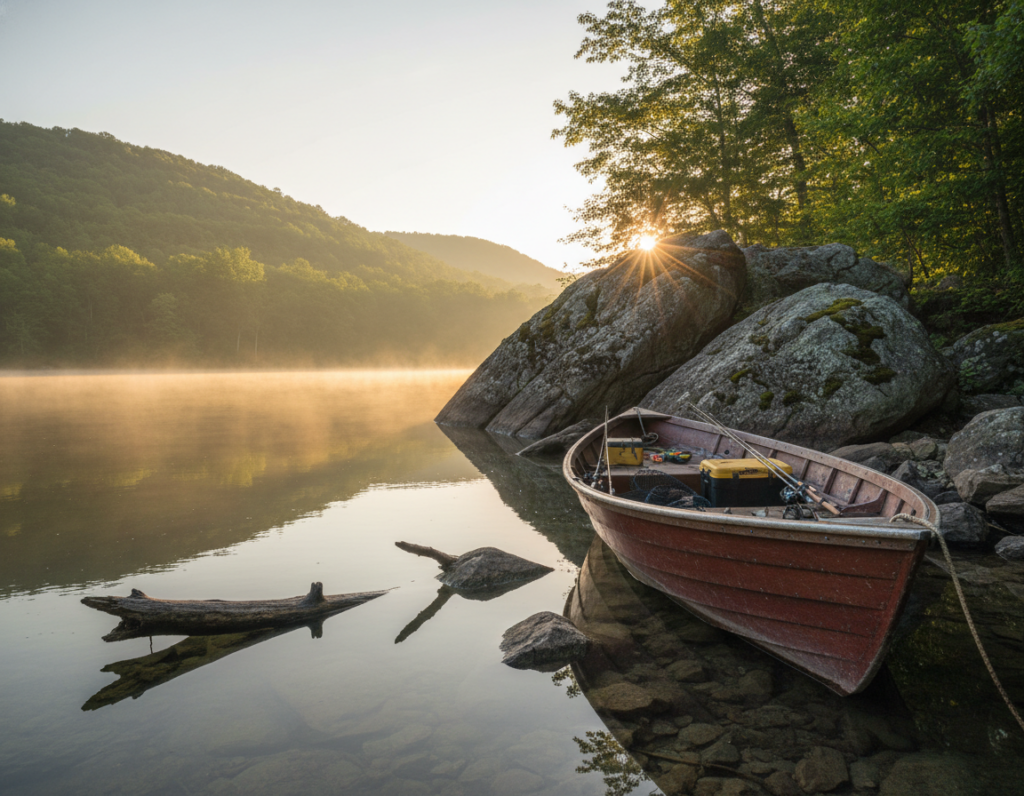
Fish both sides and watch the drop
After several casts to the shallow/top side, turn and cast to the deeper side. Suspended bass often strike on the drop near point ends and flat corners.
Change angles to unlock bites
Try casts parallel to the breakline, then across it. Some fish prefer an uphill retrieve, others bite on a downhill fall. Vary angle, distance, and retrieve speed before moving on.
Quiet approaches and efficient coverage
On flats use a slow drift or low-speed trolling to stay stealthy. Center the boat over channels so you can reach both sides. Follow breaklines steadily to avoid slipping off the edge.
- Practical checklist: fish the line from two boat angles, vary presentation, and cast to both sides of the channel.
- Time saver: good boat control increases bottom contact and lets you test more baits without losing the mark.
“Boat position is key; often fish are on the top lip, other times suspended just past the lower edge.”
How to Fish Rocks and Logs on High-Percentage Structures
Look for places where rock or wood create a pause in the flow — that’s where bass pile up. Start by hunting transitions: rock-to-mud and rock-to-weed changes at a sharp bottom drop are prime targets. Work lures that bounce or deflect off hard bottom to force reaction strikes.
Rockpiles, riprap, and gravel reefs along the sharpest breaks
Good rock shows up on electronics as hard returns and a crisp bottom line. You’ll see consistent ticks or deflections instead of a smooth sludge echo. On the water, prioritize the rock edge where it meets mud or weed, and cast baits that tap the bottom.
Logs, laydowns, and standing timber as current breaks and shade lines
Wood creates shade and slack pockets. Where laydowns intersect a creek swing or a point tip, current bends and creates a feeding lane. Fish the down-current seam first with a bait that moves slowly through the shaded slot.
Targeting the down-current side and the overlooked up-current seam
In rivers and impoundments, Frank Scalish stresses current as everything. Start down-current for the main feeding lane, then probe the up-current seam where bass can pin bait in a smaller, productive “restaurant” zone.
Where cover ends at the edge and why it’s a prime stacking zone
When weed or wood stops at a lip, bass use that meeting point as both ambush and highway. If several rock/log targets exist, pick the one nearest a defined channel lip, point tip, or ledge turn.
Troubleshoot: if bites come only from a single log or rockpile, slow down and reset with bottom-contact baits. Mark the spot and return with a slower retrieve to unlock the day.
For more detail on common high-percentage cover types, see top types of cover.
Lures, Rigs, and Presentations for Shallow and Deep Structure
Start with a search bait, then refine to rigs that hold the bottom where bass wait.
Deep tools map to specific scenarios. Use deep-diving crankbaits to sweep ledges and points fast. Carolina rigs drag transitions and let you feel subtle changes in depth. Football jigs sit and bounce on rock and gravel. Drop shots give precise depth control over ledges. Spoons work vertical or fluttering above marked fish.
Shallow choices fit tight cover or topwater action. Texas rigs get wood and laydowns. Spinnerbaits and buzzbaits cover water quickly. Poppers force aggressive strikes in low light. Weedless spoons probe weed edges without hangups.
Bottom-contact tricks: speed a crank to make the lip dig, deflect, and kick silt like a crawfish. That erratic bite trigger works on rockpiles and log tips.
Color and profile basics: use natural shad patterns when baitfish rule. Match soft plastics to the bottom color—greens and browns—for crawfish or rock-fed fish. Adjust simply for water clarity.
Retrieve cadence: add short pauses on contact, use bursts of speed, and swap between horizontal coverage and vertical presentations when pressured fish won’t chase.
| Type | Best use | When to pick it |
|---|---|---|
| Deep-diving crankbait | Cover ledges, points | Quick search of depth edges |
| Carolina rig | Drag transitions | Feel changes on flats and drops |
| Football jig / Texas rig | Rock and wood contact | Hold on bottom near cover |
| Drop shot / spoon | Precise depth or vertical | When fish are suspended or tight to a band |
“Pick the lure that keeps the desired depth and contact—don’t force your favorite bait.”
Conclusión
The clearest path to more bites is moving from guesses to repeatable steps that target real cover. Identify the key structure on your map, confirm it with electronics, then pick the best cover and mark the exact spot.
Use a simple checklist: map study → electronics verification → choose a depth zone → mark the spot → set boat position → test angles → rotate lures. Work both top and bottom edges and change your angle until you see a response.
Move vs. milk it: if multiple angles and two depths bring no signs of life, move to the next point. If you get a bite, slow down and fish that part thoroughly.
Seasons matter: in summer stay above the thermocline and follow forage; in winter prioritize steeper drops and stable depth. Instead of defaulting to the bank, spend time offshore learning how bottom and cover connect—it’s the proven way to catch more fish.

 Spanish
  English