
Anúncios
What is a swivel in plain terms? It’s a small terminal piece of tackle with a rotating center and eyes at each end. It stops twist from reaching your line so casts fly truer and knots hold better.
This buyer’s guide shows when a fishing swivel helps and when it harms. Overuse can dull lure action, cut bites, or add visible hardware in clear water. But the right choice saves time and frustration on the water.
Read on to learn the core decision factors: rotation demands, load and drag capacity, visibility, and how a swivel changes lure presentation. Size, type, and quality matter—especially in saltwater where corrosion or ring failure can mean losing a trophy fish.
Quick preview: we’ll cover what swivels do, the main types, barrel vs. crane vs. ball-bearing, sizing by technique, when to skip one, and a quality checklist for tying and rigging.
What a Fishing Swivel Does and Why It Matters for Line Twist
Stored twist in your spool starts small and builds fast when lures or current make gear spin. Inline spinners, spoons, rotating rigs, or a bait that swims in circles load coil energy into the line. That stored twist shows up as wind knots, poor casts, and sluggish lure action.
Anúncios
How the pivot works: a swivel creates a free-turning connection so rotation stays at the terminal point instead of traveling up the fishing line and into the reel spool. That simple rotation point helps prevent line kinks and keeps retrieves smooth.
When it improves performance vs when it can cost you bites
Use a swivel and you’ll see fewer tangles, better lure tracking, longer casts, and less retying. But extra hardware adds weight and flash that can alter action and reduce stealth in pressured situations.
Do terminal pieces spook fish in clear water?
In stained water or fast presentations, a small swivel rarely matters. In clear water and heavily pressured spots, it can spook fish. Practical fixes include lengthening the leader, choosing a low-profile finish like black nickel, or moving the swivel farther from the lure.
Anúncios
Function (rotation), load, and visibility together determine the right type and size. To match needs to gear and technique, learn more about swivel types.
Types of Fishing Swivels and Best-Use Scenarios
Different swivel styles answer separate needs—from quick lure swaps to heavy trolling rotation. Below is a concise look at the main types and what each solves for real-world rigs.
Barrel swivels for light rigs
Barrel swivels are the basic choice for light-duty connections. Use them between main line and leader or as a stopper point above sliding sinker rigs.
They are simple and low-profile, but can lock up if a lure spins fast under load.
Crane swivels for smoother rotation
A crane swivel is the middle ground. It turns cleaner under moderate loads and suits bottom rigs, fish finder set-ups, and light trolling with non-spinning lures.
Ball bearing for heavy rotation
Ball bearing designs keep turning under sustained drag. Choose these for heavy trolling and high-speed presentations where cheaper hardware can seize and transfer twist into the line.
Snap and 3-way uses
Snap swivels speed lure changes and help spoons and spinners swing. Avoid them on topwater lures, jerkbaits, or soft plastics where they can deaden action.
Three-way eyes let you run a dropper, a sinker line, and a hook leader without tangles. They control depth and reduce twists in current.
Wind-on for offshore braid-to-leader joins
Wind-on swivels create a streamlined pass through guides when hollow-core braid meets heavy mono or fluorocarbon leader. They cut hang-ups on long runs offshore.
- At-a-glance: pick barrel for light rigs, crane for general use, ball bearing for heavy duty, snap for quick swaps, 3-way for droppers, wind-on for braid-to-leader offshore setups.
Ball Bearing vs Barrel Swivel vs Crane Swivel: Choosing for Load and Rotation
When a lure spins or a big fish runs, the hardware between main line and leader must keep turning. Choose by two buyer-focused criteria: how well the body rotates under load and how it handles sustained pressure.
Why barrel bodies can lock under load
Barrel designs are simple and low-profile, but they rely on tight metal-to-metal fit. That works on the bench.
On the water, fast lure spin or a sudden pull raises friction. The internal barrel can seize, ending rotation and adding twist to the line. The failure cost is real: twisted line, weakened knots, and lost fish or lures.
Where crane types fit for moderate rigs
Crane swivel styles offer smoother rotation and better resilience under moderate loads. They are a practical upgrade for bottom rigs and light trolling applications.
Anglers who want improved performance without the price of bearings often pick crane options for inshore work and current-prone spots.
Why ball-bearing keeps turning under heavy drag
Ball bearing units use stainless balls and races to reduce friction dramatically. Under heavy drag and high trolling speeds they keep rotating where cheaper bodies fail.
For big-fish scenarios, long runs, or any high-rotation application, ball designs are the no-substitute choice to prevent twist and protect knots.
- Quick pick: barrel for low-cost light rigs, crane for general moderate loads, ball bearing for trolling and heavy-duty pressure.
Swivel Sizes Explained: Picking the Right Swivel Size for Your Line and Target Fish
Picking the right size makes the difference between a clean hookup and a snapped connection on a big run.
How the numbering works: the scale is counterintuitive — smaller numbers usually indicate a larger, stronger item. That can fool anglers into buying weaker gear if they assume higher numbers mean more strength.
Rule of thumb: match the rated breaking strength to your heaviest line in the system, often the leader, or pick one step higher. Oversizing slightly is safer than undersizing because a failed connector usually means a lost lure and a lost fish.
Practical picks by scenario:
- Light inshore: Size 7 (≈20–30 lb barrel / 25–40 lb ball bearing).
- Redfish/stripers or surf: Size 5 (≈40–60 / 50–75).
- Offshore trolling: Size 3 to 1/0 for kings, tuna, and big game (see manufacturer specs).
Remember larger items add weight and visibility but bring more strength and smoother rotation for heavy drag. Always check maker ratings because a barrel and a ball bearing of the same labeled size can have different pound-test.
For an easy reference, consult this compact size chart before you buy.
Fishing Swivels Guide: How to Choose the Best Swivel for Your Needs
Pick your swivel by the way you fish first, then match by lure action and the line system. That order keeps choices practical and avoids unnecessary hardware that can harm presentation.
Technique first
Trolling demands consistent rotation under speed, so ball-bearing is the default for heavy runs. Bottom and casting work tolerate crane or barrel options depending on load.
Match to lure behavior
Split lures into rotating (spinners, spoons, some live bait rigs) and non-rotating. Rotating lures need better swivel performance to prevent line twist.
Main line and leader
For braid-to-fluoro joins, a small swivel eases tie strain and reduces chafe. When stealth and sensitivity matter, prefer a direct knot or wind-on connection.
Visibility and presentation
In clear water, increase leader length, keep the swivel several feet from the lure, and pick low-glare finishes to reduce spooking.
“Start with the technique, then refine by lure action and the line setup—this approach saves time and improves on-water performance.”
| Situation | Recommended Swivel | Why |
|---|---|---|
| Trolling | Ball-bearing | Maintains rotation under speed and heavy drag |
| Light casting / finesse | Crane or direct tie | Less bulk, better lure action |
| Braid to leader | Wind-on or small swivel | Smooth pass through guides; protects knot |
| Quick lure changes | Snap swivel | Convenience but may reduce topwater action |
When You Need a Swivel and When You Should Skip It
Decide by problem, not habit. A small connector fixes rotation and protects knots, but extra hardware can also harm presentation. Use a clear rule set to choose.
Must-use situations:
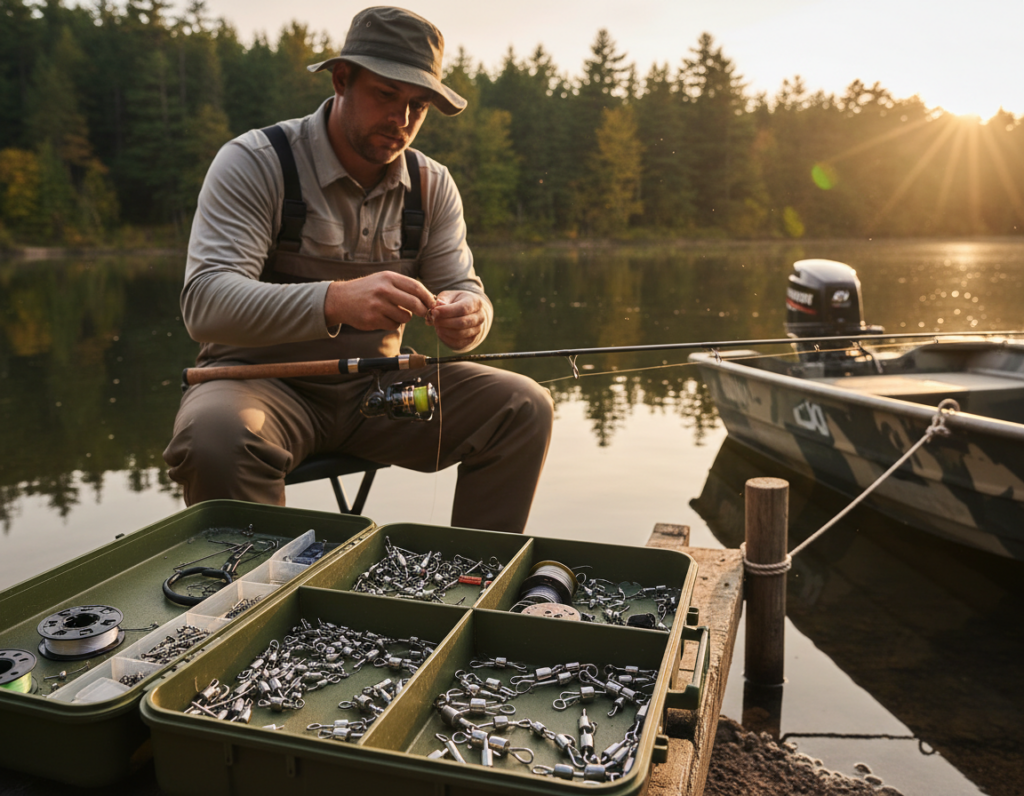
- Always fit a ball-bearing swivel for trolling — speed plus rotation will quickly twist line and a quality unit prevents spool chaos.
- Use swivels on inline spinners, spoons, live bait that spins, wire leader junctions, and heavy-current bottom rigs to stop twist and protect the leader.
When to skip hardware:
- Avoid a swivel on topwater walking baits, jerkbaits, and soft plastics — added weight or flash can kill lure action and spook fish in clear water.
- In finesse or sight-fishing, minimize terminal tackle to keep the presentation natural and reduce visibility to wary fish.
Practical compromises: If you must add one, place it farther up the leader, pick a low-profile finish, and skip bulky snaps unless a snap helps lure swing. These small choices preserve performance without sacrificing safety for your hook and leader.
Swivel Quality Checklist: Materials, Corrosion Resistance, and Strength
Start your purchase with a quick hands-on test so you don’t rely on package claims alone. Feel the rotation, inspect ring joints, and check any snap action before adding the item to your tackle box.
Materials: stainless steel vs brass
Stainless steel wins for saltwater corrosion resistance and long-term rotation reliability. Brass feels lighter but can corrode faster and wear under heavy pressure.
Ring construction matters
Welded rings resist opening under load. Pressed rings can deform and fail, costing a lost fish at the worst moment.
Snap security and styles
Coastlock snaps offer the strongest closure for heavy applications. Duolock works well for lighter rigs. Cross-lock snaps are convenient but can open under extreme load.
- Test the snap action and the end-to-end motion.
- Prefer welded rings with ball bearing bodies for high-performance applications.
- Choose black nickel or low-glare finishes in clear water to reduce flash and weight visibility.
Maintenance: rinse in freshwater after trips and spin-test each unit before the day starts to find seized parts early.
How to Tie and Rig a Swivel Correctly
A neat knot and correct placement make a compact connection that won’t ruin lure action.
Step-by-step tying
- Pass the line through the swivel eye and form a small loop toward the end.
- Wrap the tag around the standing line at least five times.
- Pass the tag through the opening near the eye, moisten, and tighten slowly.
- Trim the tag end and finish with a firm tug to test the knot.
Knot and connection tips
Palomar works best for braided line and keeps high strength. The improved clinch is quicker with mono or fluorocarbon and easy for anglers to tie on the water.
Placement and rig choices
Keep the swivel at least 12–24 inches from the lure to protect action and reduce flash. Use a leader between main line and lure to hide hardware and preserve presentation.
- Choose the correct size and weight so the connector doesn’t overpower light lures or change sink rate.
- For quick leader swaps use a small fishing swivel; for direct sensitivity prefer a knot from main line to leader without added hardware.
- Troubleshoot: if the unit won’t spin freely or the knot seats unevenly, re-tie before you fish to prevent line failure and protect performance.
Conclusion
Match the connector to the task: rotation, load, and presentation should drive your choice.
Preventing line twist is the core goal. For light work use compact barrel options; crane covers moderate loads, and ball bearing units are essential for high-speed trolling and heavy drag.
Snap hardware helps with quick swaps and some metal lures, but it can harm topwater action and bright presentations. Pick the correct size, favor stainless or welded rings, and test each piece before the trip.
Build a small, intentional kit by technique — inshore, surf, offshore — so every rig has the right connector and the right strength for the job.

 English
  Spanish