
Anúncios
Quick intro: In calm lakes, ponds, and sheltered coves a simple bobber acts as your on-water dashboard. A small plastic, cork, or foam device shows tiny takes and keeps bait at a chosen depth.
This guide teaches a practical float fishing method for US anglers. You will learn rigging, depth control, and presentation. Expect clear, usable tips rather than species secrets.
Why use a bobber in still water? It lets you hold bait in the strike zone longer and read subtle signals like slight slows or rises. Keep the line tight and the presentation natural for direct hook sets and fewer missed bites.
We preview the building blocks: pick the right rod and reel, balance the bobber and weight so the device stands correctly, and match line and leader to clear water. By the end, you should see better depth accuracy, fewer break-offs, and a more natural look to entice pressured fish.
For a deeper primer on fundamentals and gear choices, read this short guide: Float Fishing 101.
Anúncios
Why Float Fishing Works in Calm Water
On glassy water, slight changes in the bobber’s motion often mean a fish is inspecting your bait.
In still or low-movement conditions, subtle takes can show as a tiny dip, a slow slide, a tilt, or a micro-stall. Read each motion as a clue: a short dip often means a quick nip; a slow rise can mean the bait is being lifted; a slide or tilt may signal a fish pushing the bait sideways.
What the indicator tells you
Depth diagnosis: If you get nosing without commits, the bait may be too high. If the rig drags or hangs, the bait sits too deep. Adjust depth in small steps until the device shows natural, curious movements.
Anúncios
Bite detection: With no current to load the line, a sensitive buoy and tight line management beat brute force. Keep slack low so you feel micro-stalls and can set the hook quickly.
When calm beats bottom tactics
Calm surface approaches often win on shallow flats, weed edges, and when fish suspend mid-column. Pressured fish may avoid heavy sinkers on the bottom but will cruise upper layers looking for easy prey.
- Read tiny motions as early warnings, not only full submergence.
- Tie success to three controllables: depth, slack/line control, and natural movement.
- Use surface or near-surface presentations on hot, still days for higher encounter rates.
| Scenario | Float Signal | Likely Action |
|---|---|---|
| Suspended fish | Slow rise or tilt | Drop depth slightly; keep rod tip low |
| Shallow flat | Short dip then stall | Hold line tight; set hook on the stall |
| Weed edge | Slide or sideways tilt | Lift rod gently; adjust weight to avoid snagging |
For a clear primer on gear and setup that pairs with these cues, check this short guide: Float Fishing 101.
Essential Gear for Calm-Water Float Fishing
Gear choices shape how quickly you see and react to tiny takes on calm water.
Choosing rod length and action
Choose a rod between 9′ and 12′ for calm-water work. Extra length helps keep the line low and makes bite detection easier.
Opt for light to medium-light action for feel and sensitivity. Make sure the butt section stays strong to drive hooks and control larger species.
Reel options that suit the setup
Levelwind reels are versatile for mixed tasks and quick casts. A centerpin or single-action reel gives the smooth line feed prized when you focus on this style full time.
Balance the reel weight on the handle so the outfit feels natural during long watches.
Line and leader basics
Use 10–15 lb mainline for smaller waters and 15–25 lb for bigger fish and snags. Quality line reduces memory and abrasion issues around weeds and docks.
Make the leader 2–5 lb lighter than the mainline to protect the rig on snags and reduce visibility in clear water. Always check knots and leaders for nicks before each session.
| Target | Mainline | Leader |
|---|---|---|
| Small panfish | 10–12 lb | 8–10 lb |
| Bass / larger species | 15–25 lb | 12–20 lb |
Rigging the float fishing method for calm water conditions
A clean rig makes tiny bites obvious and reduces missed opportunities. Set your piece so the indicator rides upright and the bait sits naturally in the strike zone.
Fixed vs slip choices
Fixed rigs are simple and fast to cast. They work best for shallow or medium depths and quick adjustments.
Slip rigs let you present deep without a long leader. Use a bobber stop to lock depth and a second stop below the float to steady casts and read depth more easily.
Floats, materials, and profiles
Choose foam for durability and value. Balsa gives top sensitivity. Clear plastic or Drennan-style bodies reduce spookiness in very clear water.
Weights, beads, and knot protection
Pick light, subtle weights in clear conditions. Place shot so the float just shows its tip when cocked; this improves bite visibility.
Always add a bead buffer when sliding weights are used. The bead protects the mainline knot and swivel from repeated impact.
Swivels, duo-lock snaps, leader and hooks
Use a quality swivel to prevent twist and to join mainline to leader. A duo-lock snap speeds leader swaps and helps during cold sessions.
Keep leaders short—often 10–24 inches—to stop baits from drifting high. Size leaders 2–5 lb lighter than the mainline.
Choose razor-sharp hooks and go smaller in clear, calm water unless bait or target species require larger sizes.
| Component | Recommendation | Why it matters |
|---|---|---|
| Fixed float | Shallow/medium depths | Simple cast, quick adjustments |
| Slip float + bobber stops | Deep presentations | Set depth without long leader issues |
| Bead buffer | Hard bead between weight and knot | Protects knot, extends rig life |
| Swivel / duo-lock snap | Quality swivel + optional snap | Stops twist, speeds leader changes |
Setting Depth and Presentation Without Current
Dialing depth and keeping a clean presentation are the two skills that convert subtle contact into hookups on calm water. Start mid-column, then move the float up or down in small steps to find where fish are feeding.
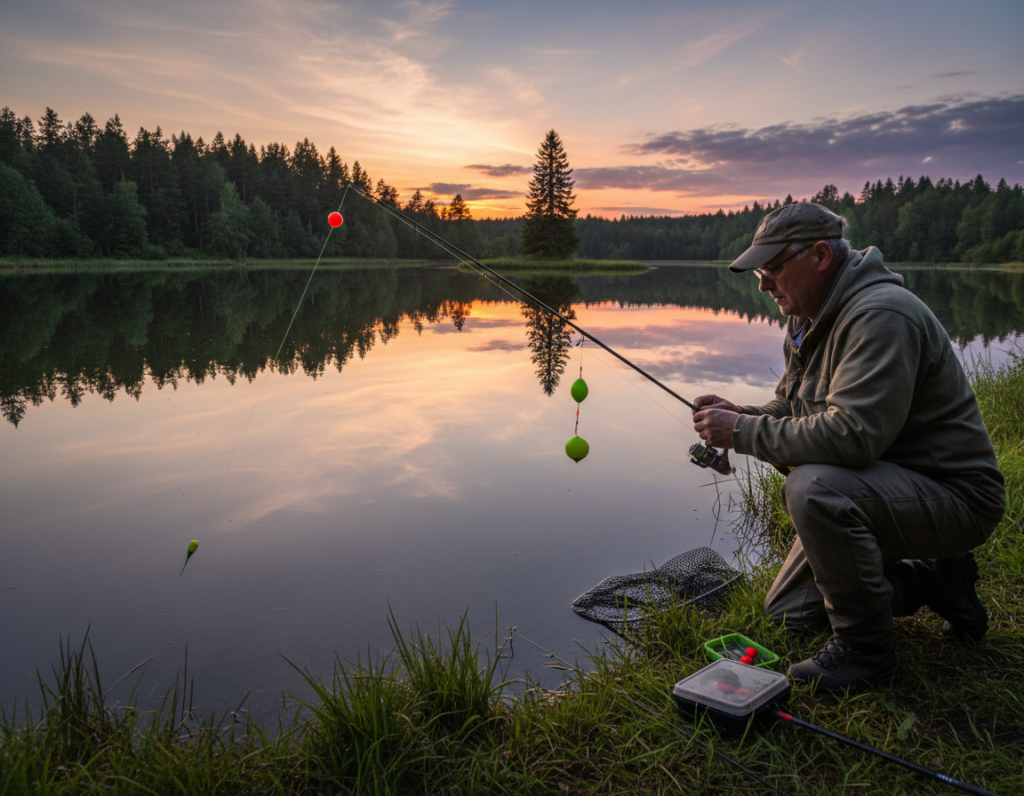
Dial in depth from surface to bottom
Cast, let the rig settle, then watch the posture of the float. If it leans, you may be dragging or too deep. If it noses without commitment, raise the bait a few inches.
A good target is about a foot off the bottom. That keeps bait in view and cuts snags in weed or soft silt.
Keep slack to a minimum for a direct hook set
Keep light tension on the line and the rod tip low. Remove bows caused by wind and only allow the line needed on the water.
A direct hook set needs minimal slack, quick read of small float changes, and a smooth lift or sweep. Avoid wild jerks that pull the presentation away.
Make the drift look natural with controlled retrieves
Use a repeatable cadence: pull–pause–pull. Small pulls move the float a few feet, then pause so the bait settles.
Watch for subtle wind-driven flow; the difference between float motion and real bait movement can betray the rig. Adjust retrieve length and pause time based on how cautious fish react.
Bait and Lure Choices That Produce in Calm Water
Pick baits and small lures that mimic what fish actually eat in your local still-water spots. Focus on natural fall, subtle motion, and matching size to the feed fish show that day.
Natural baits and presentation
Top choices: worms, salmon roe, ghost shrimp, deli shrimp, prawns, and krill. Rig worms threaded so they sit straight on the hook and rotate little. Thread roe or shrimp in clusters to keep a natural profile.
Tip: Keep bait a few inches above the bottom to present in the strike zone without snagging.
Artificial baits for selective fish
Use rubber eggs (Jensen eggs), Gooey Bobs, soft rubber worms, or yarn eggs when fish are wary. Smaller hook size and subdued colors win in clear water.
Added scent can help where legal, and artificials give repeatable, durable presentations.
Jigs, spinners and spoons under a float
Fish a light jig about a foot or more off bottom for suspended fish. Use tiny rod-tip twitches to impart life and keep the jig just above weeds.
Choose lighter spinners and spoons than you would cast. Slow the retrieve so the blade flutters; the float keeps the lure off structure and reduces snags.
Practical decision grid
- Edges and weedlines: use jigs or lightweight spoons a foot or two off bottom.
- Points and shaded banks: try natural baits near mid-column for cruising fish.
- Surface shows on hot days: keep bait high, use minimal visible line, and be ready to cast to visual takes.
Conclusion
End trips by reviewing small adjustments that turned subtle strikes into hookups. Start with a simple checklist: pick the right float and size, match weights so the device rides correctly, set depth precisely, and keep line control tight for firmer hook sets.
Present baits just off the bottom to cut snags and keep offerings in the strike zone. You can fish surface, mid-column, or near-bottom without swapping the whole setup—make small depth changes until fish respond.
Prioritize a balanced rod and reel combo, clean leader knots, sharp hooks, and quality swivels. Use a bead to protect knots and keep leader length short so bait acts natural.
Tip: Watch the float closely, react to tiny changes, re-check knots after each catch, and log what depth and bait produced in each section of water. That habit makes anglers better, fast.


 English
  Spanish