Night fishing techniques for U.S. lakes means a methodical, safety-first approach after sunset. This short guide sets expectations for preparation, sensible gear, and clear steps to follow on the water.
This is a how-to resource, not a species-only piece. You will learn how to find productive spots, pick bait and lures, position a boat, time the bite, and maintain safety in low light. The goal is repeatable systems that reduce on-water decisions.
At dusk many fish feed more actively. They rely on movement, vibration, and scent more than sight, so anglers should adjust presentation and tackle. Cooler conditions and fewer people often lead to stronger action in warm months.
Plan to arrive prepared. Check local rules on access and lights, pack reliable equipment, and scout locations during day. Treat the outing as organized work: good prep increases success and keeps everyone safe in the darkness.
Why Night Fishing Works in Freshwater Lakes
When light fades, fish shift how they feed. Visual hunting gives way to scent, pressure waves, and lateral-line cues. That change rewards presentations that add vibration and scent over bright color.
How darkness changes feeding and movement
At dusk many species pause briefly as the lake transitions. After that lull, a stronger feeding window often opens one to two hours into full darkness.
Bass, walleye, catfish, and crappie rely more on vibration and smell in low light. They move into shallow edges, points, and baitfish zones to hunt. Cooler water and reduced glare let predators expand their comfort zone in summer.
Benefits for anglers
Fewer boats and quieter conditions reduce pressure on fish. That makes methodical presentations more effective and improves chances of success.
“Treat time as a tool: plan to stay through the transition and work the stronger bite after full dark.”
- Focus on vibration, scent, and silhouette.
- Expect a sunset lull followed by renewed action.
- Target shoreline and mid-depth movement for best results.
Night Fishing Safety and Comfort Essentials
A clear safety plan turns an evening on the water from risky to routine. Prep and simple habits cut hazards and keep the trip comfortable as conditions change after sunset.
Navigation, running, and anchor lights for boats
Test all running and anchor lights before launch. Verify batteries and charging capacity so lights run for several hours.
Choosing low-traffic areas and reducing hazards in the dark
Select protected, low-traffic areas and mark routes while you still have daylight. Slow down near shorelines and structure to reduce collision risk.
Layering up for temperature drops
Bring a moisture-wicking base, an insulating mid-layer, and a wind/water-resistant outer shell for comfort as temps fall.
Visibility tools and clean-deck practice
Carry multiple light sources: a headlamp for hands-free work, a backup flashlight with spare batteries, glow sticks for marking rods, and a waterproof emergency strobe for signaling.
Keep a clean deck: stow unused equipment, secure tools, and keep walkways clear so nothing becomes a trip hazard in the dark.
- Pre-launch checklist: test navigation/running lights, confirm anchor light works, and verify battery/charging capacity for several hours.
- Wear a life jacket, tell someone your plan, carry a first aid kit and phone or VHF, and check weather before leaving the ramp.
“Simple checks and smart choices keep anglers safer and more comfortable during low-light hours.”
For a compact list of recommended gear, see night gear essentials.
Gear and Tackle Setup for Better Bite Detection at Night
Sensitive gear and tidy storage turn small taps into reliable hookups in low light. Choose rods with soft tips and reels with smooth drags so a light bite transmits through the rod and line. Use braided or low-stretch line for feel, with a fluorocarbon leader to cut glare and improve hookup rates.
Organize tackle for speed: pre-rig a handful of productive lures, label boxes, and keep pliers and cutters in a fixed spot. A clear deck prevents tangles and keeps you ready when the bite quickens.
Live bait handling matters. Keep minnows aerated, avoid temperature shock, and make frequent small water changes to preserve natural movement and scent. Store bait in sealed containers away from fuel or sunscreen to protect appeal.
Underwater lights concentrate plankton and baitfish. Mount green LEDs off the boat or near a dock edge to draw forage into your strike zone. Use dark-profile lures with rattles or bladed vibration to add silhouette and sound when visibility is limited.
“Simple gear choices and clean organization make subtle bites impossible to miss.”
night fishing techniques for Bait and Lure Selection
Choose baits and lures that rely on scent, vibration, and shape more than color when light is low. Good selection reduces guesswork and helps fish find your presentation in dim conditions.
When live bait outperforms artificials
Start with live bait when the bite is cautious or the water is cold. Minnows and nightcrawlers give scent and natural motion that trigger bites near structure and lighted docks.
If fish become actively feeding, switch to reaction-style lures for faster hookups.
Color and silhouette choices
In the dark, black and deep purple create the clearest silhouette against faint sky glow or surface reflection. Use dark-profile lures to keep a strong outline fish can see at distance.
Adding sound, vibration, and surface commotion
Include rattles in soft plastics, try bladed jigs or spinnerbaits, and use topwater plugs that splash. These locators give off noise and vibration fish track in low light.
Using scent and matching natural forage
Keep live bait fresh and avoid chemical contamination. When needed, boost presentations with scent attractants that match local forage—shad, minnows, or sunfish.
Match lure profile, vibration, and retrieve speed to the natural prey in the lake to increase strike rates.
| Presentation | Best Use | Why it Works |
|---|---|---|
| Live minnows/worms | Structure edges, lighted docks | Scent and natural motion attract wary fish |
| Black or purple soft plastics | Open water, silhouette casts | Strong outline in low light; effective profile |
| Rattled/banded lures & topwater | Active feed periods, surface feeding | Vibration and surface commotion act as locators |
Finding Productive Night Fishing Spots on Freshwater Lakes
Finding the best spots after sunset starts with reading light and structure, not guesswork. Focus on edges where artificial lights meet dark water—the “light line” concentrates bait and draws predators.
Fishing the light line: docks, bridges, and edges
Cast parallel to the edge where lights fade. Predators ambush baitfish moving across that border, so cover the lane with tight, accurate casts.
Targeting structure and ambush areas
High-percentage structure includes points, ledges, steep banks, standing timber, and brush piles. Each feature funnels forage and creates predictable lanes where larger fish stage.
Using the moon and returning to day locations
The moon changes behavior. A full moon often increases visibility and feeding, so fish may roam more under moonlit water.
Pre-fish known daytime locations with sonar and mark waypoints. Returning after sunset reduces navigation risk and boosts efficiency.
- Approach quietly from a distance and avoid spotlighting the water.
- For shore vs. boat: cast tight to structure; stay tucked to avoid spooking fish.
- Species tendencies: bass near docks/brush, walleye on points/ledges, catfish along breaks.
“Work the light line and structure first; they make the most productive, low-risk spots on most lakes.”
For more on setting up before dark, see night fishing.
Timing, Presentation, and Boat Positioning After Dark
Getting to your spot before sunset lets you rig, mark hazards, and move with confidence once it gets dark. Use that extra time to test lights, set waypoints, and organize tackle so decisions stay simple during prime hours.
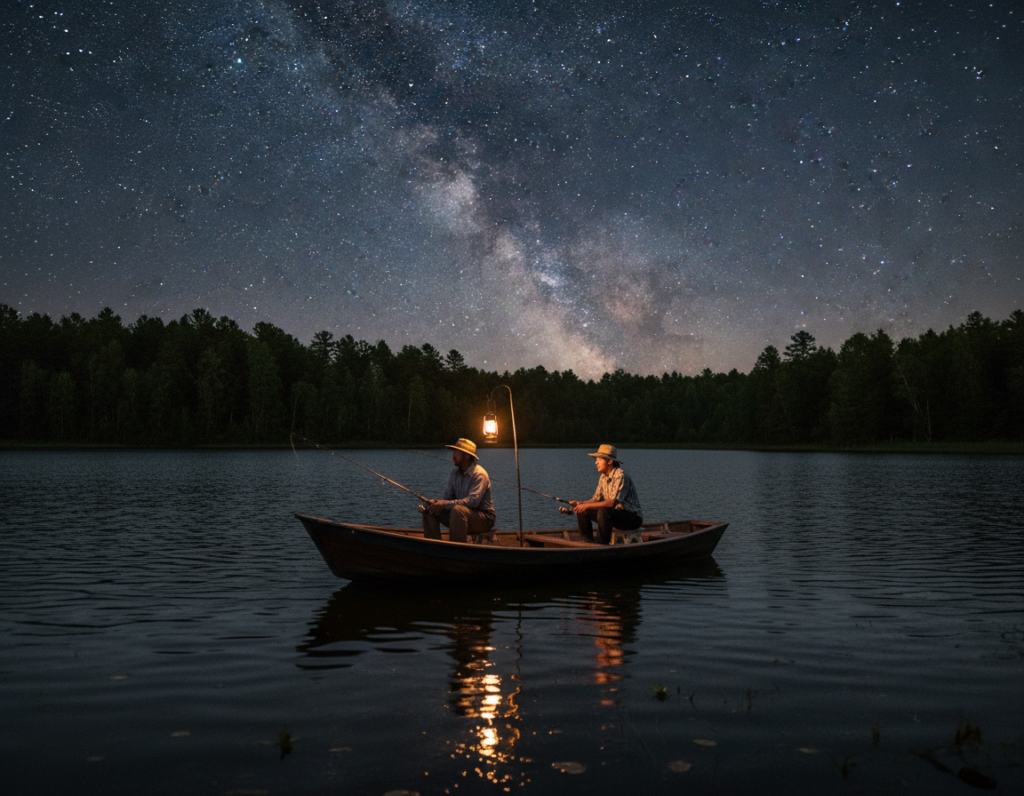
Work the water column
Start presentations near the surface—topwaters, shallow runners, and suspended baits often trigger the first bites. If activity is sparse, lower your lure in measured steps until you find the feeding band.
Anchoring vs. drifting
Anchor when you want control and to stay on active fish; confirm the anchor light and keep the deck tidy. Drift when wind and open water let you cover more ground, but avoid drifting near marked hazards.
Plan for the post-sunset lull
Expect a quiet period around sunset. Be patient; many lakes produce a stronger bite one to two hours after full dark. Adjust presentation speed by conditions: slow, subtle retrieves in clear water; more vibration and noise in stained or windy water.
- Hold off structure to cast shallow and work toward it.
- Keep lights minimal and noise low to prevent spooking fish.
- Reposition the boat quietly to follow movement and changing water lines.
Conclusion
Good preparation and simple habits are the real advantage that separates lucky nights from consistent success. Prioritize safety lighting and multiple visibility tools, pick spots where light lines meet structure, and use presentations fish can find in low light.
Keep a system: arrive early, organize gear, and rely on repeatable spot and lure choices instead of guesswork. Live bait often wins; dark silhouettes and vibration, noise, or scent improve strike rates.
Plan to stay through the after-dark bite window, track results, and tweak one variable at a time. Pick a familiar lake, run a short trip, and log what works to make future outings more consistent for anglers seeking reliable action.