
Anúncios
Choosing the right carry system changes how fast you swap lures and how much gear you actually use. This roundup compares fishing backpacks and a tackle bag for anglers who want better fishing tackle storage and smoother days on the water.
“Better” here means quicker lure changes, fewer lost hooks, less wasted space, and safer transport for terminal pieces. We will weigh carry styles, internal layouts, and how each works with common tackle box systems sold in the US.
This guide previews the factors that matter most: organization style, capacity, comfort, wet-condition durability, and reachability while actively fishing.
Think of this as a product-roundup guide that helps you shortlist items by use case — bank, boat, kayak, or hiking spots — not just looks. Expect practical takeaways on what to buy first, how to build a modular system around trays, and tips to avoid online checkout problems.
– Quick comparison for on-water efficiency.
Anúncios
– Decision factors: organization, comfort, durability.
– A tackle box can still be central to either setup.
Fishing backpacks vs tackle bags for today’s anglers
Modern anglers favor a hybrid approach: soft bags or backpacks combined with standard tray boxes for repeatable organization.
Anúncios
Why that matters: Many online categories group trays by sizes (3500/3600/3700) and by one-, two-, and three-tray formats. Anglers use those trays as the core of their kit, then pick a soft shell to suit how they move.
What each option is designed to carry
- Backpacks: hands-free carry, balanced weight, room for rain layers, pliers, and a small hydration bottle.
- Tackle bags: fast-access pockets, a stable footprint on a bank or boat deck, and easy open-and-grab lure changes.
- Typical carry list: hard lures and soft plastics, live or scented bait containers, spare spools or leaders, and small tools and accessories.
Practical notes: Keep bait in wipeable, separated compartments to manage odor and wetness. Anglers who use multiple techniques often standardize around tray sizes so the shell—backpack or bag—just houses that system.
| Feature | Backpack | Tackle Bag | Best for |
|---|---|---|---|
| Access Speed | Moderate | High | Quick lure swaps |
| Carry Comfort | Hands-free, balanced | Shoulder or grab | Hikes vs stationary spots |
| Tray Compatibility | Works with standard trays | Works with standard trays | Modular kits |
| Wet/Bait Handling | Separated pockets help | Wipeable compartments preferred | Odor control |
Quick decision cue: Walk far? Pick a backpack. Set up in one spot and change lures a lot? A tackle bag often wins.
For details on bag and box combos, see this concise guide to tackle bags and boxes. The best choice hinges more on organization, access, and protection than on brand name.
Fishing tackle storage: what matters most before you buy
Pick a system that matches how you move, what you keep, and how fast you need it.
Organization styles: adjustable compartments and fast access
Adjustable dividers reduce wasted space and keep hooks, weights, and jig heads separated. That prevents snags and lets you find items fast.
Micro-organization with many small cells helps lure collectors. Larger sections speed access when you retie or swap lures often.
Capacity and formats: tray compatibility and modular kits
Think in standard footprints—3500, 3600, 3700—so a new tray fits your soft carrier or box. Modular boxes let you dedicate one tray per technique and swap systems without repacking.
Carry comfort, durability, and on-water access
For shore, pier, kayak, or wading, prioritize comfort and balance to avoid back strain. Kayaks and wading favor compact boxes; bank sessions can use larger boxes.
Choose trip-proof materials that resist abrasion, wet surfaces, and splashes. Finally, decide between top-load and front-load layouts and add a grab-and-go tray for fast rigging when fish are active.
When a fishing backpack is the better choice
If you move every 10–20 minutes, the right pack keeps your essentials within reach and your footing steady. A backpack spreads weight across both shoulders and holds gear snug to your center of gravity.
Best for hiking to remote spots and hands-free carry
Why it works: balanced load, safer steps on uneven banks, and room for rain layers and hydration. Backpacks let you keep poles or rods secure while you climb or cross logs.
How backpacks pair with modular boxes
Mobile angler loadouts usually include one to three modular boxes by technique, a small terminal box, and a compact tool kit to avoid overpacking.
- Build around standardized tray footprints so swapping a box is quicker than repacking.
- Pack heavy items low and close to your back; protect fragile hard baits in padded pockets.
- Keep frequently used items in top or side-access pockets to cut search time.
- Label boxes and use a repeatable layout to prevent a “black hole” where items vanish.
Buyer takeaway: If your style is to cover water on foot, choose comfort, good straps, and a pack layout that allows access to at least one box without unloading everything.
When a tackle bag is the better choice
A well-placed tackle bag turns a stationary day on the water into a fast, organized workflow.
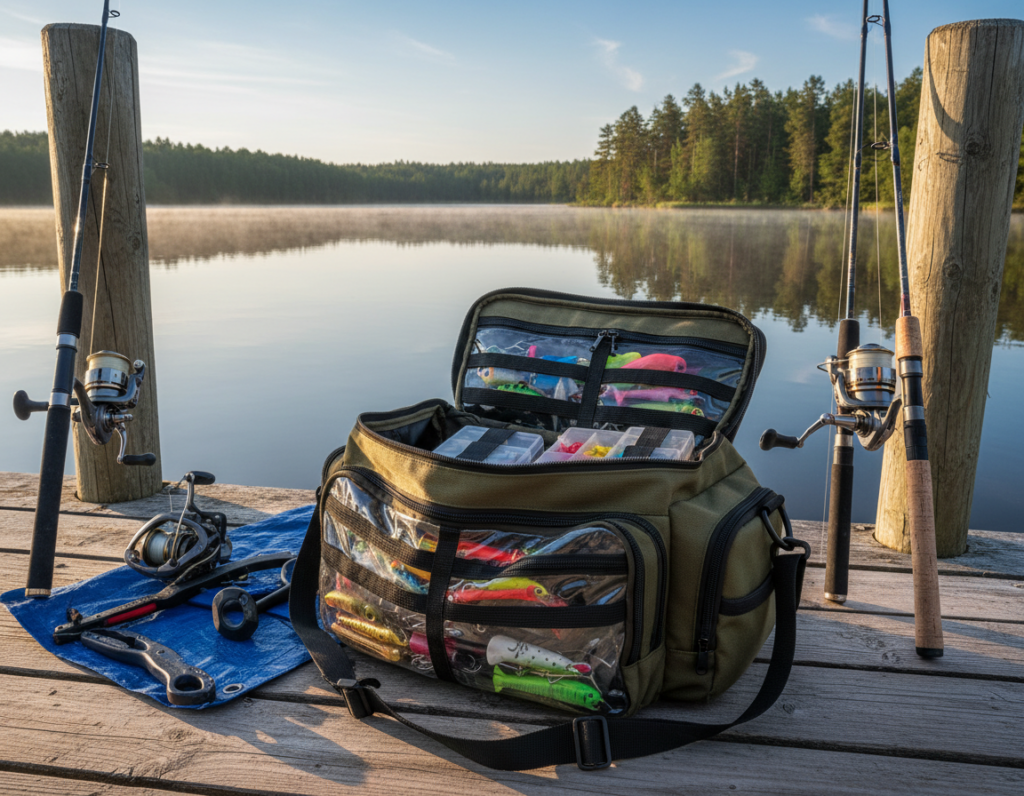
A bag often wins when you plan to stay put. It sits open on the bank or boat deck and keeps multiple boxes within immediate reach.
Front-zip access and external tool sleeves make quick changes effortless. Leaders, snaps, and scent go in dedicated pockets so you can grab what you need without digging.
| Situation | Advantage | Why it matters |
|---|---|---|
| Boat deck | Stable rectangular footprint | Less tipping; stages beside you |
| Bank setup | Mini workbench | Seat + bag = fast lure swaps |
| Technique trips | Holds multiple tray boxes | Crankbait, jig, terminal boxes all handy |
For bait management, choose a bag with a wipeable pocket or a removable container to keep odors and mess contained.
Decision rule: if your fishing style is “set up, fan-cast, and rotate lures,” a dedicated bag layout is usually the fastest way to manage tackle storage. Also confirm the internal dimensions match your favorite tackle box sizes so lids close without jamming.
Learn more on practical combos in this guide to tackle bags and boxes.
Top tackle storage setups to consider right now
Match format to function: compact trays for quick sessions, larger racks for big collections. Choose a layout that reflects how long you stay, what species you target, and how fast you need gear at hand.
Tray tackle boxes and classic formats
One-, two-, and three-tray builds let you see lures and hooks at a glance. One-tray boxes work for short trips; two- and three-tray boxes suit an angler who splits soft baits, hard baits, and terminal gear.
Classic trays are great for mixed items but may struggle with very bulky plastics unless the box depth is larger.
Rack and X-large boxes
Move up for big collections or multi-technique weekend trips. Rack and X-large boxes trade portability for capacity and let you pre-stage boxes by species or method.
Plano-style boxes and adjustable layouts
Adjustable compartments matter: they let you tailor cells for lures, snaps, or spare line. Plano-style builds emphasize rugged materials for wet, rough use.
Fishing kits and grab-a-bag combos
Buy a basic kit for beginners or a backup bag for guests. Example pack: one terminal box + spare line + a small bait pocket for pond hops. For a weekend bass run, use multiple pre-packed boxes.
Shopping and checkout tips
Filter by size (3500/3600/3700), pick tray vs rack, confirm in-stock status, and review what each product includes before adding to cart.
If a checkout page shows a “page blocked” or a “blocked extension” warning, try disabling extensions (start with ad blockers), refresh, or use an incognito window. If errors persist, use LiveChat or retailer support and save the error text, browser, and device details to speed orders resolution.
Conclusion
Match your kit to your routine: mobility favors a backpack; rapid access and a stable work area favor a bag. Choose the carrier that fits how you move and where you spend most time on the water.
Upgrade smart, not big: the best step is a consistent tackle box system. Pre-fit modular boxes and boxes by technique so swaps are fast whether you carry a backpack or a bag.
Final checklist before you buy: confirm box compatibility with your carrier, pick top-load or front-load access, and verify materials for wet conditions.
Buying reminder: check what’s included, confirm shipping and returns, and build a setup that helps you fish more and rummage less.

 English
  Spanish