
Anúncios
This practical fishing regulations guide explains how to stay compliant and protect waterways in Michigan. The state’s annual guide and Michigan.gov centralize current rules, licensing, maps, and timely updates.
Before you keep any catch, confirm the rules that apply where you fish and what species you target. Rules change, and the annual guide is the authoritative reference for licensing, season timing, size and bag limits, gear rules, special-area restrictions, and harvest reporting.
Our goal is simple: help anglers avoid penalties and support conservation of natural resources. This section previews the major compliance pillars and notes that location-specific rules can vary by water and species.
Key takeaways: Use Michigan.gov and the annual guide as primary sources. Check rules before keeping fish. Compliance supports conservation and legal access for all.
What Fishing Regulations Are and Why Anglers Should Care
A clear set of rules shapes how anglers use lakes, rivers, and streams so communities and habitats thrive.
Anúncios
What these rules include: licenses, open seasons, creel and possession limits, minimum size or length, allowed gear and methods, and mandatory harvest reporting.
This framework helps protect key life stages for fish species. Harvest limits and season timing keep spawning fish safe and stocks resilient for future generations.
Protecting fish populations for future generations
Conservation measures limit take when fish are most vulnerable. That keeps populations healthy and supports annual fishing traditions over time.
Anúncios
Keeping waters fair, safe, and sustainable
Following regulations gives equal opportunity to bank anglers, ice anglers, and charter clients. Clear rules reduce crowding and lower conflict on busy waters.
How rules support fisheries management
Fisheries management relies on harvest reports, survey data, and angler observations. That data lets managers adjust seasons, limits, and methods to balance use with science.
- Method limits can reduce hooking mortality and boost post-release survival.
- Season windows protect spawning runs and young fish.
- Reporting improves stocking and long-term planning.
| Rule Type | Purpose | Who it affects | Example |
|---|---|---|---|
| Licenses & Permits | Legal access & funding | All anglers | State resident and nonresident fees |
| Seasons | Protect spawning | Targeted fish species | Closed runs during spring spawn |
| Size & Bag Limits | Maintain population structure | Recreational harvesters | Minimum length and daily creel |
| Gear & Method Rules | Reduce harm, ensure fairness | Boat, shore, and ice anglers | Hook type or spearing restrictions |
Next up: detailed breakdowns of possession limits, minimum size, and waterbody boundary rules in later sections.
How the Michigan Department of Natural Resources Sets and Updates Rules
The Michigan Department of Natural Resources follows a formal review cycle to keep rules current and science-based.
Process overview:
- Staff analyze population surveys, harvest reports, and angler data.
- Managers propose changes to match management objectives and habitat shifts.
- Proposed updates are vetted, published in the annual digest, and adjusted with in-season notices when needed.
Why the annual digest changes: Fish trends, angler pressure, habitat conditions, and lessons from prior seasons all drive updates.
Examples of recent, meaningful updates
Steelhead minimum sizes were adjusted on select Type 3 and Type 4 streams to protect spawning cohorts.
New single-point hook windows and spearing prohibitions were added in specific ports to reduce harm.
Some broodstock lakes now carry a 50-inch muskellunge minimum to protect large, reproductive fish.
Where to find the current version
Always consult official Michigan DNR channels on Michigan.gov for the current rules, not screenshots or old PDFs saved on a phone.
“The department natural role blends enforcement with stewardship to maintain sustainable opportunity.”
Tip: Expect midseason changes like fee adjustments; confirm online before you go.
Finding the Current Michigan Fishing Regulations Available Online
Start with trusted state sources. Michigan.gov/Fishing hosts the annual fishing guide and web pages that show current rules available online. The annual digest is the baseline reference, but online pages and PDFs may include important updates or clarifications.
Use the Michigan DNR Hunt Fish app to buy licenses, view permits, check maps, and reference rules from your phone. The app is available on the App Store and Google Play. For times without service, pre-download PDFs and save your license credentials so you can access them offline.
When to double-check rules before you go
Confirm rules available online when you plan to try a new waterbody, target a new species, cross a state or international boundary, or fish during seasonal change.
- Michigan.gov/Fishing — current pages and the downloadable annual guide.
- Michigan DNR Hunt Fish app — field-friendly maps, licenses, and notices.
- Check online right before travel — fees or in-season updates may occur.
Remember: correct compliance starts with knowing your exact location and the specific rule set that applies there. Double-checking online saves penalties and protects resources.
Michigan Fishing License Basics for Residents and Visitors
Securing a valid license removes uncertainty and keeps your trip focused on the experience, not enforcement issues.
Who needs one: All anglers—residents and visitors—must carry a valid fishing license before taking lines to public waters unless a specific exemption applies. The department natural resources enforces this at launches, ramps, and shorelines.
Season timing and why it matters
The Michigan license year begins April 1. That start date matters for spring trips and opener weekends.
Buy or renew early to avoid delays at the ramp, especially on busy holiday weekends.
Fees, online purchase, and enforcement
License fees may change after the printed digest is produced. Check Michigan.gov for current pricing before you buy.
You can purchase a michigan fishing license online and store proof on your phone. Keep ID handy; enforcement officers may ask to see both.
“A valid license is the single compliance item that takes effect before you hook your first catch.”
Once licensed, remember season dates, size limits, and possession limits still govern what you may keep. Confirm rules for your exact water so the michigan fishing license protects both you and the resource.
Understanding Fishing Seasons and Season Dates
Start trips by checking the seasonal calendar for your target species and the exact water you’ll visit. Season windows in the Michigan fishing season listings differ by species, waterbody, and sometimes by method.
How season dates protect spawning fish
Season dates close or limit take during sensitive spawning periods. That reduces pressure on adults and gives young cohorts a better chance to grow.
What “open all year” means versus closed seasons
“Open all year” means the waterbody has no seasonal closure for that species. It does not remove size limits, bag limits, gear rules, or boundary notes. Closed seasons still may apply to other species on the same lake or river.
Planning trips around the current season
Match destination and target species to the current season before you go. Read waterbody notes and tables carefully, since dates and special measures can change year to year.
- Confirm the exact water and its listed season dates for your target.
- Avoid assuming last year’s window still applies.
- Check for special gear or area-specific limits that override statewide defaults.
General Statewide Rules vs. Special Regulations
A statewide default sets the starting point, but local exceptions can change what applies on any given water.
General statewide rules act as a baseline. They cover license needs, common season windows, and default size and bag limits. These apply across most public waters unless an override is listed.
Special regulations can supersede the baseline for a specific river reach, port area, or designated trout stream type.
When rules differ by species and waterbody
Where you catch and keep a fish—the species location—matters. A fish taken from a connected lake may follow a different size or bag limit than one taken upriver.
How management units and maps influence what applies
Use DNR maps and management units to identify the correct rule set. Large systems and boundary waters often split by management unit, not by the nearest launch.
- Read the waterbody name, county, and reach description carefully.
- Watch for exceptions listed in the notes column of tables.
- Do not assume the closest boat launch defines the legal boundary.
| Item | Purpose | Where to check | Example |
|---|---|---|---|
| General statewide | Default baseline | Annual guide and summary pages | Standard season dates and daily limits |
| Special regulations | Protect species or habitat | Waterbody entries and maps | Trout stream type restrictions |
| Management units | Clarify jurisdiction | DNR maps and unit tables | Boundary waters split by unit |
| Table notes | Show exceptions | Regulation tables and footnotes | Reach-specific gear limits |
Tip: Use maps and the waterbody description before you keep fish. Later sections will explain size limits, possession rules, and shared-water jurisdiction in detail.
Size Limits, Minimum Size, and Minimum Length Explained
Knowing how to measure a fish correctly prevents accidental possession of an undersize catch. This section shows simple steps and why managers set these thresholds.
Definitions and purpose
Minimum size and minimum length mean the shortest total length a fish may be kept. These rules protect immature fish and preserve quality catches for future seasons.
How to measure
- Lay the fish flat on a board or measuring device.
- Measure total length from the tip nose to the tail tip—do not bend the tail.
- Record the length immediately before placing any keeper in a cooler or livewell.
Why size limits vary
Size limits differ by fish species and water because growth rates and spawning needs vary. Size limits lake rules reflect local goals for stock health and angler opportunity.
| Term | Meaning | Example |
|---|---|---|
| Minimum size | Shortest legal total length | Protects juveniles |
| Minimum length | Measuring convention (total length) | Tip nose to tail tip |
| Size limits lake | Lake-specific rules | Lake Michigan mixed salmonid limits |
Real-world update: Inland stream rainbow trout (steelhead) no longer carry a 20-inch minimum on several Type 3 and 4 streams. Always confirm the current table before keeping a fish measured near the limit.
Bag Limits and Possession Limits: How Many Fish You Can Keep
Plan who will keep which catch before you head out. Clear roles prevent confusion when counting daily limits and what you may hold overnight.
Bag limits versus possession limits
Bag limits mean how many fish per day an angler may legally take. Possession limits are the total number fish an angler may have in control at any time—coolers, camp, or transit.
Both matter because you can meet a daily bag limit yet exceed possession limits if you keep prior days’ catch.
How “per angler” counts work on shared trips
When rules say per angler, each person has their own allowance. Counting and combining fish between people can create problems if totals are not tracked.
On charter boats or family outings, mark who owns each keeper and keep a running tally so each person knows their remaining fish per day.
When a catch must released and ethical handling
A fish must released if you hit the daily limit early, if it measures undersize, or if a special rule limits take in that water.
Handle releases carefully: minimize air exposure, use dehooking tools, and revive fish before letting them go. If you must released a fish, do so quickly and calmly.
| Item | Meaning | Practical tip |
|---|---|---|
| Bag limit | Daily fish per angler allowed | Track each catch immediately |
| Possession limit | Total you may have in control | Mark coolers with names |
| Per angler rule | Individual allocation on shared trips | Decide who keeps fish before the trip |
| Must released | Circumstances requiring immediate release | Stop targeting that species once limit reached |
Note: regulations apply where the fish was taken and where you retain it. Crossing a boundary with retained catch can create compliance questions. Next section covers shared-waters walleye rules and how jurisdiction and method rules interact.
Walleye Regulations Across Shared Waters: Lake St. Clair, Detroit River, and Lake Erie
Where you drift or troll matters: the same walleye may fall under different rule sets a few yards apart. Confirming the legal boundary is required because possession and enforcement follow location, not launch point.
Michigan at a glance: six fish per day, 15″ minimum size, open year-round, and three rods per angler. That means a typical day trip from a public ramp allows each licensed angler to retain up to six walleye that meet the 15-inch requirement while using up to three rods for trolling or active methods.
Rods per angler limits matter on busy waterways. Multiple lines increase encounter rates and complicate counts on multi-person boats. Charter boat operators must track each client’s rod use and retained catch to keep everyone compliant.
Compare nearby jurisdictions
Rules shift across the international and state lines. Always consult the walleye sport fishing regulations PDF for the official map and full boundary notes before you go.
| Jurisdiction | Daily limit | Size rule | Lines/rods |
|---|---|---|---|
| Michigan (St. Clair/Detroit/Erie) | 6 fish per day | 15″ minimum | 3 rods per angler |
| Ontario (Lake St. Clair / Detroit River) | 6 fish per day | No size limit (varies by area) | Line rules vary (e.g., 2 lines/boat angler on St. Clair) |
| Ohio (Lake Erie) | 6 fish per day | 15″ minimum | 3 rods per angler |
Practical takeaway: even when waters look continuous, rules change at jurisdictional lines. Confirm jurisdiction before keeping fish and re-check every May 1—the annual update point for these waters—so you have the current michigan fishing regulations for the season.
If you target multiple species on the same trip, verify any additional species-specific limits and reporting requirements before you keep fish. Following the posted fishing regulations protects your trip and the resource.
Gear Rules and Legal Methods: Hooks, Artificial Lures, and More
Check your gear and methods before launch so you do not carry prohibited items into a restricted port. Even with a valid license and open season, the tools you use must match where regulations apply.
Common method categories and how they work
Legal methods include rod-and-reel with bait, rod-and-reel with artificial lures, trolling, and permitted non-angling take where allowed. Managers may limit hooks, lines, or spearing gear to reduce harm.
Seasonal single-point hook and spearing limits
From Nov. 1–Nov. 30, single-pointed hooks are restricted in the ports of Grand Haven, Muskegon, and Whitehall/Montague. On the same dates, it is unlawful to spear or even possess spearing gear on those waters.
Why these method rules exist
Conservation aims drive these measures: fewer deep hooks, fewer injuries, and higher survival for released fish. Use barbless, circle, or approved multi-point rigs and favor artificial lures where allowed to reduce mortality.
- Do a pre-launch gear audit to remove prohibited hooks or spears.
- Read water-specific notes before you cross ports; regulations apply by location.
- Consult the department natural resources pages or the department natural contact for boundary clarifications when in doubt.
When you prep gear this way, you protect fish and lower your risk of a citation in michigan fishing areas where method limits apply.
Mandatory Harvest Registration: When You Must Report a Fish
When you land a trophy species, mandatory harvest reporting may be the most important step before you go home. This action is separate from your license and must be completed for certain species.
Which species require immediate reporting
Lake sturgeon and muskellunge must be registered within 24 hours after you harvest fish of these species. Know this before you target trophy fish so you can plan compliance.
How to register within 24 hours
Report online at Michigan.gov/DNRLicenses or call 888-636-7778. Save confirmation numbers or screenshots and keep them with your gear or license proof.
Where you cannot complete registration and the Black Lake exception
Do not expect to register at fish hatcheries, DNR field offices, or customer service centers. Black Lake sturgeon are an exception: follow on-site instructions and register immediately with DNR personnel.
Why this matters: timely harvest data helps managers evaluate stocking, protect long-lived species, and ensure natural resources remain healthy. Build reporting into your end-of-day routine so documentation is secure before travel or processing.
Muskellunge and Trophy Fish Rules: Protecting Large Fish
Large, breeding-age muskellunge receive special protections to safeguard future stock and angling quality. These trophy-focused measures prioritize long-term population health over short-term harvest.
Why trophy rules exist: protecting large fish preserves key genetics and improves spawning success for targeted fish species. Managers set a higher minimum size to keep broodstock in the system so future recruitment and angler opportunity remain strong.
Broodstock-lake examples and practical notes
Thornapple Lake (Barry & Eaton) and Lake Hudson (Lenawee) now carry a 50″ minimum size limit for Great Lakes strain muskellunge. Confirm waterbody-specific size limits before you act.
Measuring and handling tips: use a bump board, measure total length, minimize handling time, and plan a quick photo-and-release when not harvesting. If a muskellunge is legally taken, follow mandatory harvest reporting steps described earlier.
| Waterbody | Strain | Minimum size | Management intent |
|---|---|---|---|
| Thornapple Lake | Great Lakes strain | 50″ | Protect broodstock traits |
| Lake Hudson | Great Lakes strain | 50″ | Ensure spawning success |
| Other trophy waters | Varies | Check local table | Special management |
Tip: treat trophy fisheries as special management waters and re-check the annual guide and official michigan department natural pages each season for updates.
Trout and Salmon: Using Inland Maps and Stream Types to Follow Regulations
Using official inland maps stops guesswork about where specific stream rules start and end.
Why maps matter: trout and salmon rules are highly place-specific. A single creek can carry different restrictions by reach. Maps make those boundaries clear so you know which rules apply where you stand.
Where to find and use inland maps
Access the department natural resources web pages and downloadable trout and salmon map PDFs. Use map legends to identify Type 3 and Type 4 stream sections and note numbered reaches.
Type 3 vs. Type 4—practical differences
Type 3 and Type 4 streams may have different daily limits, gear controls, or minimum size measures. Rules can change within the same watershed or county.
- Steelhead update: several Type 3 and 4 streams no longer list a 20-inch minimum size.
- Before you wade: confirm stream type, section boundaries, harvest rules, and any method limits.
- Save offline PDFs and screenshots of official tables for remote areas and verify the current year’s print or online table before keeping any fish.
Planning a Michigan Fishing Trip That Stays Legal
A short pre-trip checklist removes guesswork and helps keep your day legal and stress-free on Michigan waters.
Pre-trip checklist: license, season dates, size limits, and possession limits
Confirm your fishing license is valid for the current season and carried on the trip.
Check season dates and local tables for the water you’ll visit. Note any size limits and daily allowances before you leave.
Plan how you will track kept fish so group coolers do not exceed possession limits or break general regulations.
Choosing locations using maps and management info
Use Michigan.gov/Fishing maps and management-unit pages to pick a spot. Maps show reach boundaries and special-area notes.
If you plan to target multiple species, pick access points that fall under the same rule set or be ready to move if boundaries change.
Using weekly reports without confusing conditions with legal info
The weekly fishing report helps with weather and bite expectations, not with legal specifics. Treat it as conditions intel only.
Always cross-check the annual fishing tables and current online pages for final rule decisions before keeping any fish.
- Create a trip binder (digital or printed) with the relevant annual fishing pages and your license proof.
- For group or tradition trips, assign one person to verify rules, track counts, and manage cooler labeling.
- Common mistakes to avoid: crossing a boundary unknowingly, keeping fish before measuring, and forgetting the new license year started.
Good planning reduces stress on the water and lowers the chance of accidental violations. When in doubt, consult the current Michigan resources before you act.
Why Following Regulations Matters Beyond Avoiding Penalties
A responsible angler’s choices today directly shape the health of our lakes and rivers tomorrow.
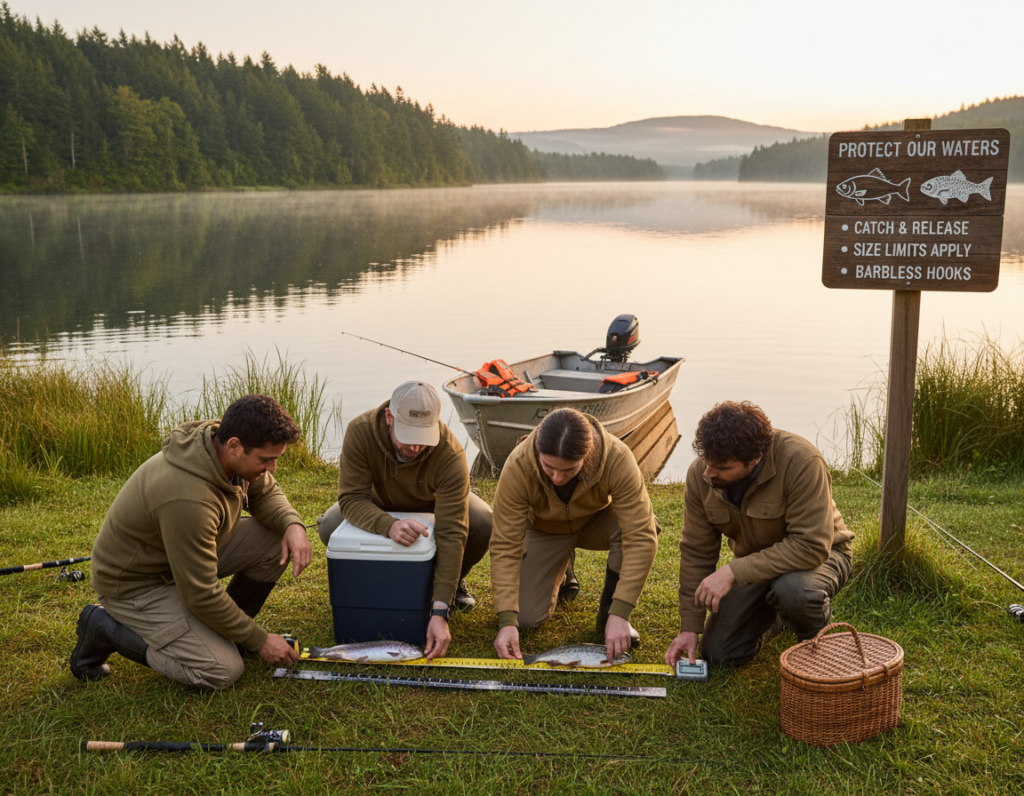
Conservation outcomes you can see
Following regulations is a direct investment in local natural resources, not just an enforcement box to check. When anglers use proper release techniques, respect closures, and use legal gear, mortality for released fish falls.
That leads to stronger year classes, healthier habitat, and more balanced predator-prey relationships. Over time, those outcomes produce better catch rates and improved shore- and boat-side experiences for everyone.
Keeping annual traditions alive
Consistent compliance keeps access open and reduces pressure to impose harsher limits. Protecting the resource helps families preserve annual trips and traditions tied to michigan fishing.
- Model ethical behavior for new anglers and youth.
- Track and report harvest when required so managers have timely data.
- Treat rules as a shared social contract that keeps waters fair across user groups.
For broader legal context on fisheries law, consult the federal framework summarized in the federal fisheries code.
Fishing Regulations Guide Checklist for On-the-Water Compliance
Work through a short, repeatable routine each time you land a fish to keep compliance simple and fast.
Confirm the waterbody and boundaries
Locate the exact water and boundary line before you decide to keep fish. Rivers that flow into lakes and international lines change which rules apply.
Use maps, launch signage, or your app to verify the applicable management unit. When unsure, delay keeping any catch until you confirm jurisdiction.
Measure every fish against minimum size
Measure on a board immediately after landing, from tip nose to tail tip. Record length before placing a fish in a cooler.
This habit prevents accidental possession of undersize fish and speeds compliance checks.
Track number kept and stop when limits hit
Keep a visible tally for each angler. Stop retaining that species once the daily limit is reached and follow release best practices.
Save proof of reporting and do a gear sanity check
If harvest reporting applies, save confirmation and carry it with your license proof. Remove illegal hooks or spearing gear before entering restricted ports.
| Action | Why it matters | Quick tip |
|---|---|---|
| Confirm waterbody | Determines which rules apply | Check map or app at launch |
| Measure fish | Ensures minimum size compliance | Measure on board, record length |
| Track retained count | Prevents exceeding daily limits | Mark a tally on cooler or phone |
| Save reporting proof | Required for specific harvests | Screenshot confirmation |
For vessel operators or commercial users, review the small vessel compliance notes before departure.
Conclusion
Treat Michigan.gov/Fishing and the official DNR pages as the final authority before you keep any fish.
Responsible michigan fishing starts with checking current fishing regulations and matching your license, season dates, size limits, gear, and reporting to the exact water you’re on.
Use the annual fishing guide, Michigan.gov pages, inland maps, and the walleye shared-waters PDF when relevant. The Michigan Department and the Michigan Department Natural Resources update rules to protect stocks and ensure fair opportunity.
Adopt simple habits: confirm boundaries, measure every potential keeper, track counts, and save harvest confirmations.
Before your next trip: verify the rules online and share this checklist with anyone joining your outing.

 English
  Spanish