
Anúncios
This guide helps beginners build calm, realistic plans for a weekend on the water. You’ll find practical advice that keeps things simple: a small lake, a lightweight setup, and time to fish near sunrise and sunset.
Relaxing here means fewer choices at the shore, less gear to manage, and more focus on comfort and flexibility. That approach cuts frustration and increases actual fishing time.
The goal is a positive day on the water and, if luck allows, some fish. We won’t chase mastery in one outing. Instead, expect clear steps for choosing a style, picking a location, and researching spots.
This guide previews a “keep it simple” plan: one or two rods, a small tackle selection, easy-access water, and basic planning for licenses, weather, food, and safety. It also points to US resources like state agency pages and USGS gauges for future trips.
Set the goal for a relaxing weekend fishing trip
Decide what success looks like: quiet shore time, easy access, and low stress. A clear aim keeps plans simple and helps everyone enjoy the day.
Anúncios
What “relaxing” looks like: pick calm water, short drives, easy parking, and shore or walk-in entry. Avoid busy ramps and crowded docks so the experience stays calm. Pack basic safety items and confirm licenses before you leave.
Decide who’s coming
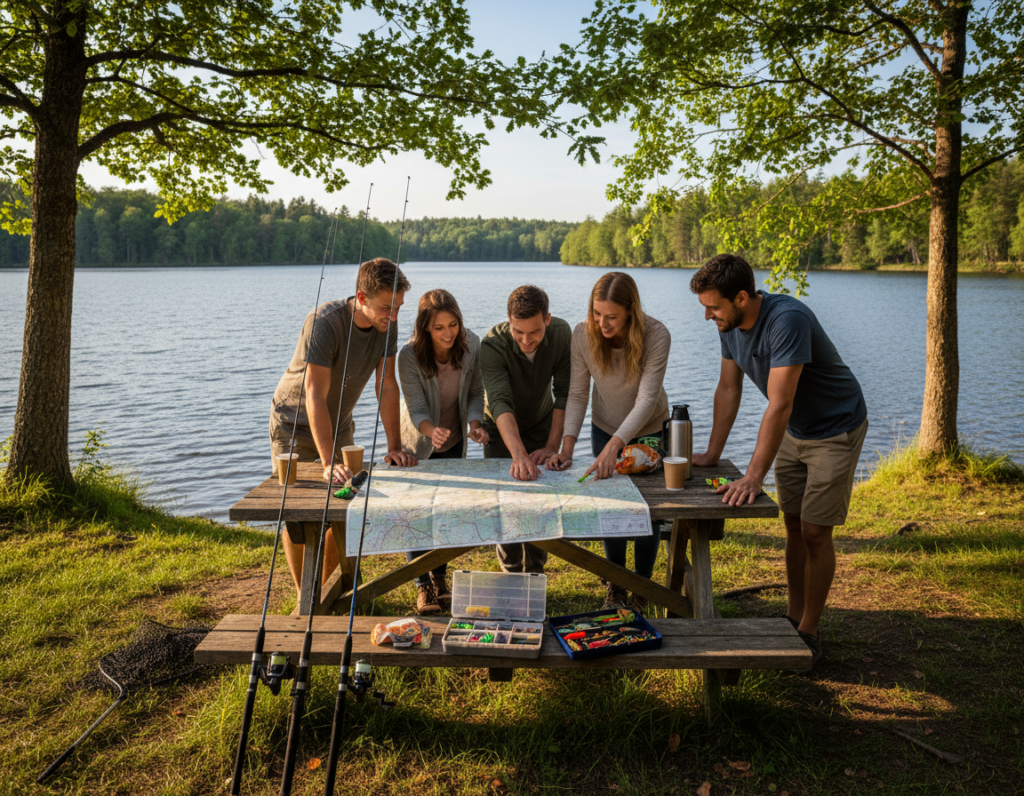
Solo anglers get flexibility and quiet. Groups of friends can split chores and share gear. A family day should favor frequent wins, snacks, and short sessions for kids.
- Clarify the weekend “why”: stress relief, learning basics, or time together.
- Set low-pressure goals: learn a knot, practice casting, or enjoy the setting.
- Agree on who brings licenses, first aid, and the cooler.
| Group | Focus | Ideal access | Success measure |
|---|---|---|---|
| Solo | Quiet, flexible schedule | Walk-in shore | Relaxed pace |
| Friends | Shared tasks, social | Boat ramp or easy shore | Good food and laughs |
| Family | Comfort, steady action | Short walk to water | Kids get a catch |
Choose the right fishing style for your experience level and comfort
Choose a method that keeps gear light and maximizes hands-on time on the water.
Anúncios
Freshwater angling is the most accessible for beginners. Small lakes and rivers offer easy shore access, straightforward equipment, and frequent chances at common species. That makes freshwater a good choice when your goal is simple, quick wins.
Saltwater usually needs different tackle and more planning. Expect tides, wind, and sometimes a boat or pier. If you have limited time, saltwater may require extra research and equipment.
Fly angling is rewarding but technical. Casting and line control take practice, and local knowledge about hatches or flows helps. A short lesson or a guide can speed learning.
Planning from scratch means picking destination water, timing for target species, budgeting permits and lodging, and doing focused research via agency maps and reports.
Adding fishing into another outing calls for quick wins: find public water nearby, cut gear to essentials, and call a local shop for current advice.
When a guide helps: new waters, tight schedules, or faster learning make guided time a smart investment.
How to Plan a Relaxing Weekend Fishing Trip around the right location
A well-chosen location lets beginners spend time fishing instead of fighting access or conditions.
Pick beginner-friendly water
Pick beginner-friendly water: small lakes, ponds, and easy river access points
Small lakes and ponds usually have calm water, light pressure, and simple shore access. These places make rigging and casting easier for new anglers.
Easy river options include gentle banks, clear access points, and steady flows. Avoid fast currents and confusing drop-offs for first-timers.
Match the location to your purpose
Match the location to your “why”: scenery, quiet water, or higher catch chances
Choose scenic, quiet areas when stress relief is the goal. Pick lakes with known populations of common species when you want steady action for kids or confidence-building.
Nearby amenities—parking, restrooms, and short trails—make a place feel more like a getaway and less like a scramble.
Plan for wind, crowds, and backups
Plan for wind and crowds with backup spots nearby
Wind can ruin an otherwise calm day. Smaller coves and sheltered bays often stay fishable when open basins blow up.
- Beginner water checklist: small lakes/ponds, stable shorelines, simple entry, nearby parking and services.
- Identify two to three alternate spots within short drives so you can pivot if crowds, weather, or muddy water occur.
- When a boat helps: a small craft expands access on calm water. It adds complexity when weather or launches are rough.
Research fishing spots using maps, apps, and local intel
Before you go, gather maps, reports, and local tips that save time and prevent surprises. Good prep makes it easier for beginners to pick legal access and reliable places where the odds of bites are reasonable.
Start with state resources and rules
Check your state fish and wildlife agency for current regulations, public access maps, license needs, and special rules like slot limits or bait restrictions. Confirm seasons and any single-hook or marine regulations before choosing a final spot.
Use mapping tools and atlases
Use tools like onX Fish and TroutRoutes to verify boundaries, find boat ramps, and mark shoreline entry points. Shortlist 3–5 options on a map, then pick 1–2 primary spots plus backups based on drive time and simple access.
Pull in local, real-time intel
Scan fishing reports, forums, and recent trip notes for current conditions like muddy water or low flows. Then call a local fly shop or tackle shop and ask what bait is working, which areas are crowded, and where beginners are having success.
Quick tip: Be courteous when asking for local intel. Ask broad questions, respect private honey holes, and support the shop if you get specific help.
Build a low-stress schedule that fits the best fishing times
Set a simple rhythm for the day so most of your time is spent near the water when fish are active.
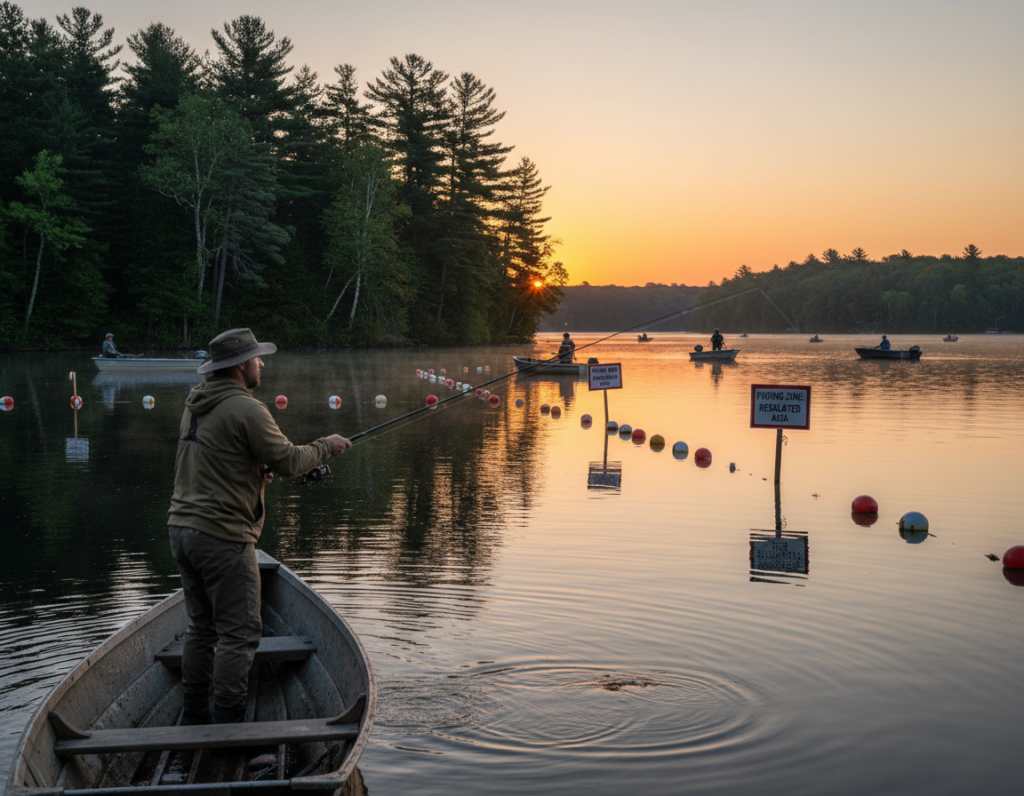
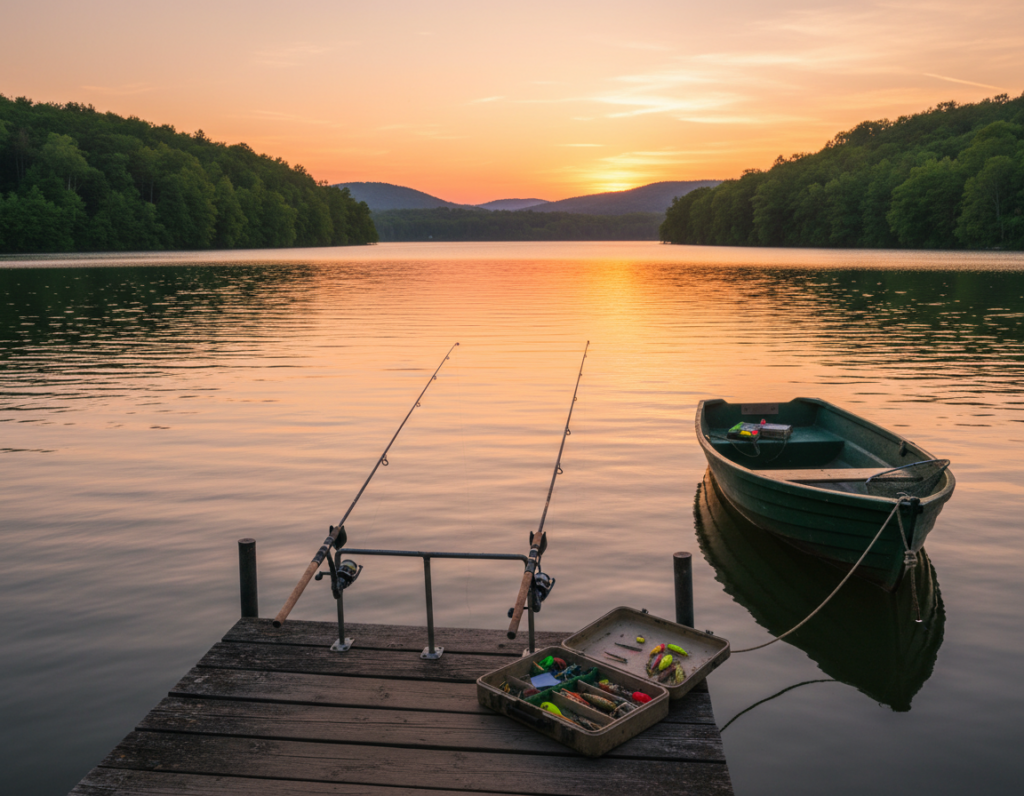
Fish sunrise and sunset for calmer water and more active fish
Early and late light often triggers feeding. These windows bring calmer water, cooler temps, and fewer people at ramps and shorelines. Camping or staying close makes hitting both easy.
Use midday for food, rest, exploring, and retying tackle
Treat midday as purposeful downtime. Eat, nap, or scout alternate spots nearby.
Maintain gear then: retie knots, change leaders, and check line. Also check weather updates and wind shifts before heading back out.
Consider night fishing when it matches your target species and comfort level
Night can be productive for species like catfish, but only if lighting, secure footing, and safety make it relaxing. Avoid forcing long hours if it stresses you or the group.
- Sample two-session plan: 2–3 hours at first light, a long midday break, then 2–3 hours near sunset.
- Be flexible: move to backup spots or shift windows when weather or crowds interfere.
- Keep expectations realistic: pick a schedule you can follow without pressure, especially with family or limited daylight.
Quick reminder: The best schedule is the one that reduces stress and lets you enjoy more time by the water.
Pack light with a practical weekend fishing gear checklist
Keep your kit small so the day stays about fishing, not hauling bags. A minimalist setup cuts stress and gives more time on the water.
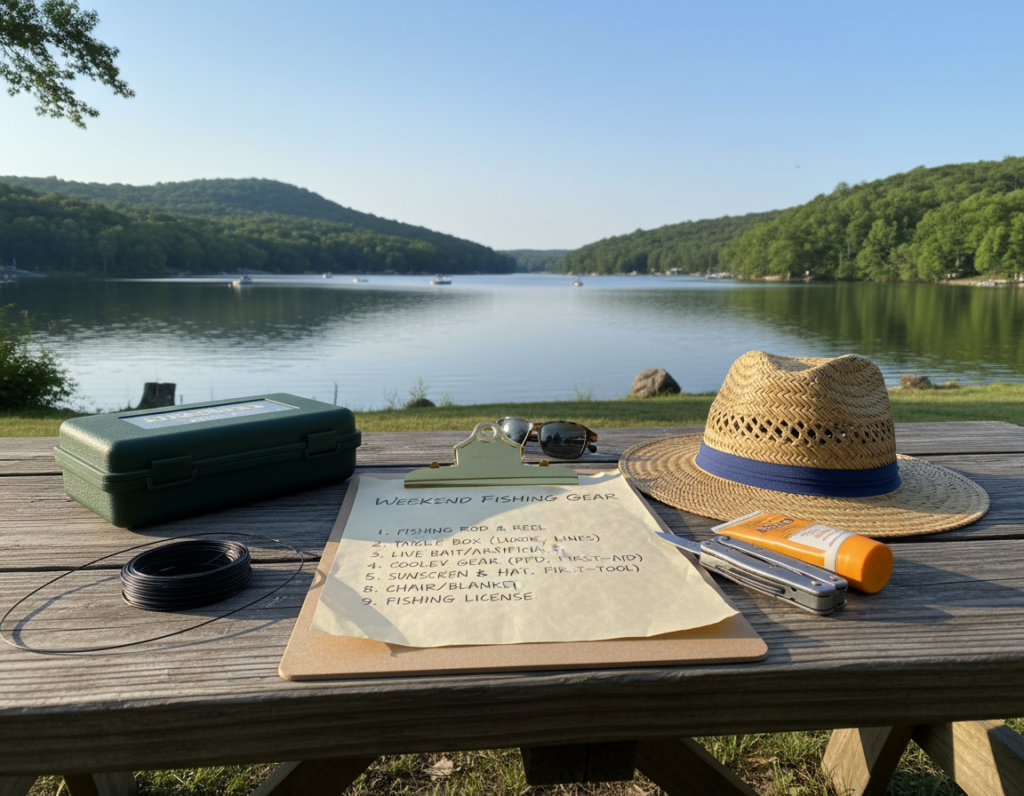
One or two rods and a tight tackle box
Bring one primary rod and a backup or a second technique. That size keeps choices simple and rigs repeatable.
Simple bait and basic rigs
Nightcrawlers and minnows work for many species. Use few hook sizes, a couple weights, and a bobber for quick wins.
Trip-saver tools and organization
Pack pliers, line cutters, extra line, a small net, and basic first-aid for hook wounds. Store gear by category so you can grab what you need fast.
When a small boat helps — and when it doesn’t
An inflatable or portable boat can expand access on calm ponds and lakes. Skip it if launches, wind, or extra equipment will add stress.
| Item | Why | Quantity | Notes |
|---|---|---|---|
| Rods | Primary control, backup option | 1–2 | One general rig, one alternate technique |
| Tackle box | Reduce decision fatigue | Small | Few hooks, 2 lures, weights, bobbers |
| Tools & safety | Prevent trip-killers | Set | Pliers, extra line, net, first-aid |
| Bait | Reliable action | Nightcrawlers/minnows | Keep fresh and cool |
Tip: Tie a couple rigs and check drag the night before so the morning starts smooth.
Plan food and comfort so the trip feels like a getaway
Small habits—hot coffee at dawn, a dry chair, an organized bin—make a full day by the water feel effortless.
Why comfort matters: Hungry or cold people lose focus fast, and a disorganized site eats time that could be spent fishing. Good food, warm layers, and clear storage keep spirits high and the day calm.
Easy meals, water, and a simple coffee setup for the weekend
Keep breakfasts simple: instant oats, fruit, and ready coffee. Pack sandwiches or wraps for lunch so cleanup is minimal.
For dinner, choose one-pot options or pre-cooked meals that reheat. That saves time and limits dishes after the day ends.
Bring plenty of drinking water and a small cooler for perishables. A lightweight stove or pour-over kit makes early light sessions far more pleasant.
Keep it organized: camp layout and packing systems that save time
Set shelter first, then the cooking area, then prep rods and tackle. This order saves time and prevents missed evening bites.
- Use separate bins for cooking, clothing, and gear so you can grab essentials fast.
- For family comfort, add shade, folding chairs, and a dry bag with spare clothes for kids.
- Label containers and store common items where everyone can reach them.
Quick tip: A short arrival routine—tent, stove, rods—gets you fishing before dusk and keeps the day relaxed.
| Item | Purpose | Suggested Quantity |
|---|---|---|
| Water jugs | Hydration for day and cooking | 2–3 gallons |
| Cooler | Keep food fresh | One medium |
| Coffee kit | Easy warm drink at sunrise | Stove or portable brewer |
| Storage bins | Organize gear and food | 3 labeled bins |
| Seating & shade | Family comfort and longer day | Chairs + canopy |
Check weather, water conditions, and safety factors before you go
Spend ten minutes on weather and water data; that small step prevents most common day-of problems. Making safety part of the outing keeps the mood calm and the group comfortable.
Use forecasts and pack smart
Use short-term weather forecasts to choose calmer days and plan clothing. Wind matters: it affects casting, boat control, and shoreline fishability.
Always pack a light rain layer even when the report looks good.
Rivers and tailwaters need extra checks
For river users, check USGS streamflow gauges before departure. Compare current flows to normal seasonal levels and avoid unfamiliar banks when flows are high.
For tailwaters, review dam release schedules. Generation changes can raise levels quickly and change both safety and bite patterns.
Tailwater vs. freestone—plain differences
Tailwaters hold steadier temperatures but can change with dam operations. Freestone streams rise and fall with rain and snowmelt and can “blow out” after storms.
Make a quick rules check: confirm state regulations and access notes before you leave, since closures can change at short notice.
| Feature | Tailwater | Freestone |
|---|---|---|
| Flow driver | Dam releases | Rain and snowmelt |
| Temperature | More stable | Variable |
| Safety note | Watch release schedules | Avoid after heavy rain |
Fish simply and stay flexible once you’re on the water
Start your on-water time by fishing the places where fish naturally gather. That gives you quick feedback and often early catches, which keeps morale high for family and new anglers.
Start with high-confidence areas
Search weedbeds, points, protected bays, and deeper contours first. These spots collect bait and concentrate predators. In lakes, work weedlines and rock piles. On a river, try edges, seams, and slower pockets.
Multi-species tactics for steady action
Use live bait or simple lures that catch many species. Nightcrawlers and minnows suit panfish, bass, and walleye. Focus on steady bites rather than chasing one big fish species when kids are along.
When fish talk, listen
If bites come in weeds, keep working that cover. If the action moves to deeper structure, shift depth and slow your presentation. Change only one variable at a time: depth, speed, bait, or place.
Tip: If no bites after a fair window, move calmly to the next logical spot. Rough conditions? Move into protected water for comfort and safety.
Consider guided fishing trips to reduce guesswork and learn faster
Hiring a guide is one of the fastest ways to turn a short outing into a productive, low-stress experience. Guides handle logistics so you can focus on fishing and learning.
What guided tours usually include
Most guides provide rods, reels, tackle, and bait, plus on-water instruction and access to local spots. That often covers licenses, basic equipment, and a plan based on current bite patterns.
When a guide makes sense
Book a guide when you are new to an area, have limited time, or want to try fly or saltwater methods. Guides help anglers learn knot-tying, casting, rigging, and fish handling quickly.
Boat-based vs shore-based guiding and what to ask
Ask about meeting location, what the guide supplies, space for family gear, and comfort items. Confirm licensing and insurance, species focus, and cancellation terms.
Tip: A good guide keeps everyone engaged and often makes family trips more enjoyable by removing gear headaches and finding steady action.
Conclusion
Small choices—easy access, light gear, and flexible timing—make big differences in how the day feels.
Keep the core approach simple: pick beginner-friendly locations, do focused research, follow a low-stress schedule, and carry minimal equipment like one or two rods and a tight checklist.
Simple wins matter: calm water, backup spots, quick meals, and readiness for changing weather and flows. Double-check state regulations and confirm access before departure for safe, legal time on the water.
If one spot or tactic fails, pivot without pressure. Each outing builds experience, raises the odds of a good catch, and grows confidence for future fishing trips.
For family groups, favor comfort, steady action, and shared moments over chasing trophies. Enjoy the reset.

 English
  Spanish